




Heritage Chrysler Dodge Jeep Ram of Logan

Blog

Dealership vs. Private Seller: Which Is the Better Place to Buy a Used Vehicle?

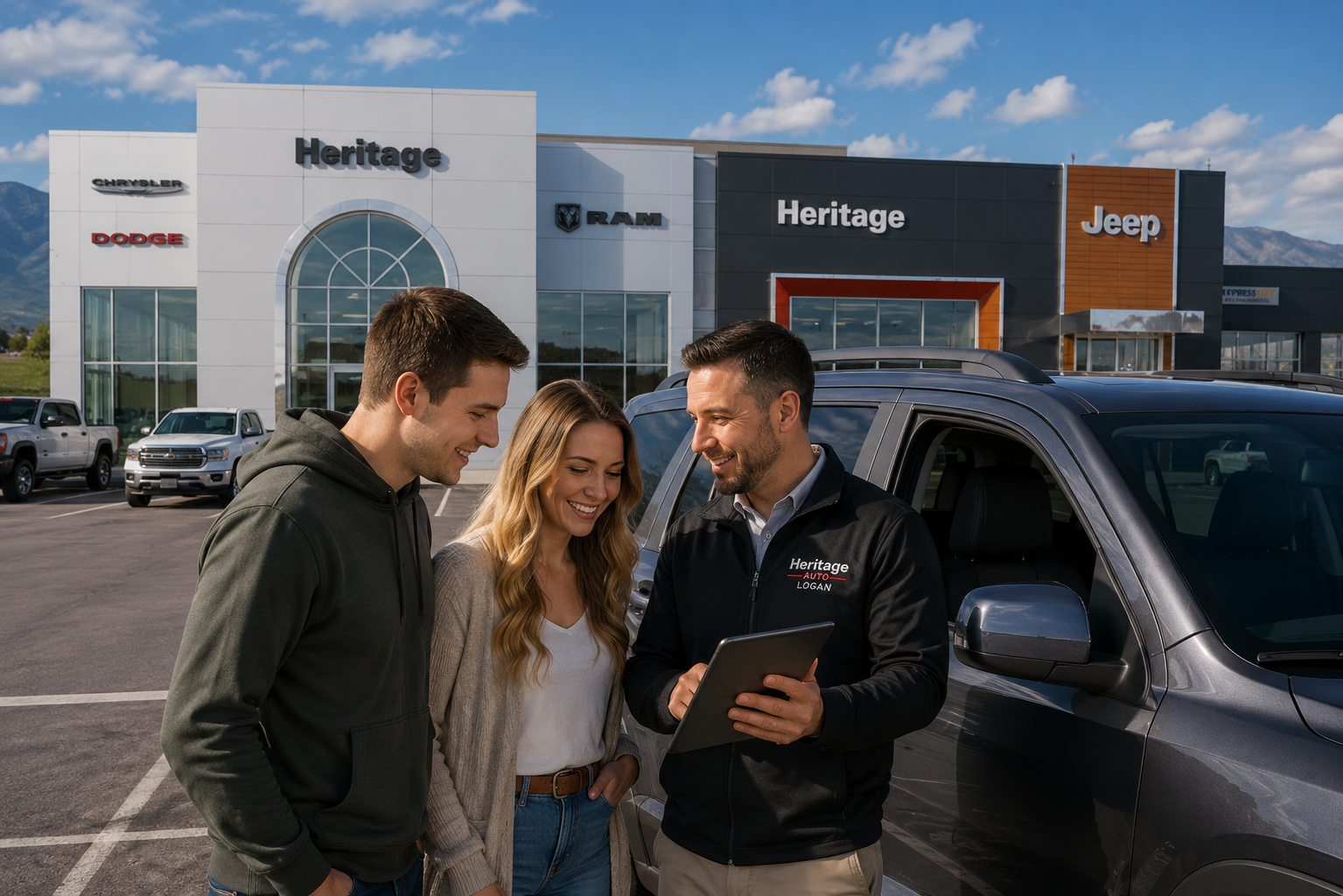
Heritage Auto Logan sales consultant reviewing a used SUV with customers outside the Heritage Chrysler Dodge Jeep Ram dealership in Logan, Utah.

Scroll through Facebook Marketplace or KSL for a few minutes and you'll find hundreds of used vehicles for sale. Some look like incredible deals. The photos are polished, the descriptions are convincing, and the asking price is often lower than what you'd expect to see at a dealership.

So why do so many people still choose to buy from one?

It comes down to one word: confidence.

Buying a vehicle isn't like buying a lawn mower or a piece of furniture. It's something you'll depend on every day. It needs to get you to work on icy mornings, haul the kids to practice, and make it through road trips without turning into an expensive surprise on the side of the highway.

Price matters, but it's only part of the equation.

The Best Deals Aren't Always the Cheapest

Everyone loves saving money. There's nothing wrong with trying to find the best value.

The problem is that value and price aren't always the same thing.

Picture this. You find a truck online that's priced a couple thousand dollars less than similar trucks at local dealerships. It looks clean in the photos, the seller says it's "always been reliable," and the test drive goes well. You shake hands, sign the title, and head home feeling like you found a bargain.

Two weeks later, the check engine light comes on.

Now what?

Maybe it's something minor. Maybe it isn't. Either way, you're on your own.

That's the gamble with private sales. Most people selling a vehicle are honest, but once the keys change hands, the transaction is usually over.

A Dealership Has More to Lose

Think about it from the other side.

A dealership doesn't just sell one vehicle. It sells hundreds, sometimes thousands, every year.

Its reputation is built one customer at a time.

If people have a bad experience, they tell their friends. They leave reviews. They don't come back.

That's why reputable dealerships invest time inspecting vehicles before they ever reach the lot. They want customers to leave satisfied because they know today's customer might also be tomorrow's service customer, repeat buyer, or neighbor.

In a community like Cache Valley, reputation travels fast.

Inspections Matter More Than You Think

One of the biggest differences between a dealership and a private seller happens long before you ever see the vehicle.

Most dealerships inspect used vehicles before putting them up for sale. Technicians look for mechanical issues, worn components, and safety concerns that many buyers wouldn't notice during a fifteen-minute test drive.

Can an inspection guarantee you'll never have a repair? Of course not.

Vehicles are machines, and every machine eventually needs maintenance.

But knowing trained technicians have already looked it over gives you a level of confidence that's hard to put a price on.

Buying Local Has Its Advantages

Let's say you buy a used SUV from someone you've never met.

A week later, you have a question about one of the features or notice something that doesn't seem right.

You send them a message.

Nothing.

You call.

Straight to voicemail.

That happens more often than people think.

When you buy from a local dealership, you know exactly where to go if you need help. Whether it's a question about your vehicle, scheduling service, or simply learning how a feature works, there's a team that's invested in helping you long after the paperwork is signed.

That's not just customer service. That's accountability.

Financing Doesn't Have to Be Complicated

Private sales usually require buyers to arrange financing themselves or pay cash.

For some people, that's no problem.

For others, it can mean making extra trips to the bank, waiting on paperwork, or trying to coordinate everything with the seller's schedule.

A dealership can often simplify that process by working with multiple lenders and helping buyers compare financing options in one place.

Less running around means more time enjoying your new vehicle.

Don't Forget About Your Current Vehicle

Selling your own vehicle sounds easy until you're the one answering messages at ten o'clock at night.

"Is this still available?"

"What's your lowest price?"

"Can I come look at it tomorrow?"

Then comes scheduling test drives, negotiating with strangers, and hoping they actually show up.

Trading your vehicle at a dealership eliminates most of that hassle. It may not be the right choice for everyone, but for many people, the convenience alone is worth it.

Trust Is Hard to Measure

You can compare horsepower.

You can compare fuel economy.

You can compare prices.

Trust is different.

It's built through honest conversations, transparent pricing, and people who are willing to answer your questions instead of avoiding them.

That's what makes buying from the right dealership different from simply buying from any dealership.

Why It Matters at Heritage Auto Logan

At Heritage Auto Logan, we've always believed that selling vehicles is only part of what we do.

Our goal is to create an experience where people feel comfortable asking questions, taking their time, and making a decision that's right for them.

Some customers buy their first vehicle from us. Others come back years later when it's time for their next one. Many trust us with routine service long after the sale.

We don't see those relationships as transactions.

We see them as neighbors choosing to do business with neighbors.

That's something we're proud of, and it's something we work hard to earn every day.

When you're deciding where to buy your next vehicle, don't just compare prices.

Compare the experience.

Compare the support you'll receive after the sale.

Compare the people you're buying from.

Those are the things you'll remember long after you've forgotten what the window sticker said.
Recommended Posts

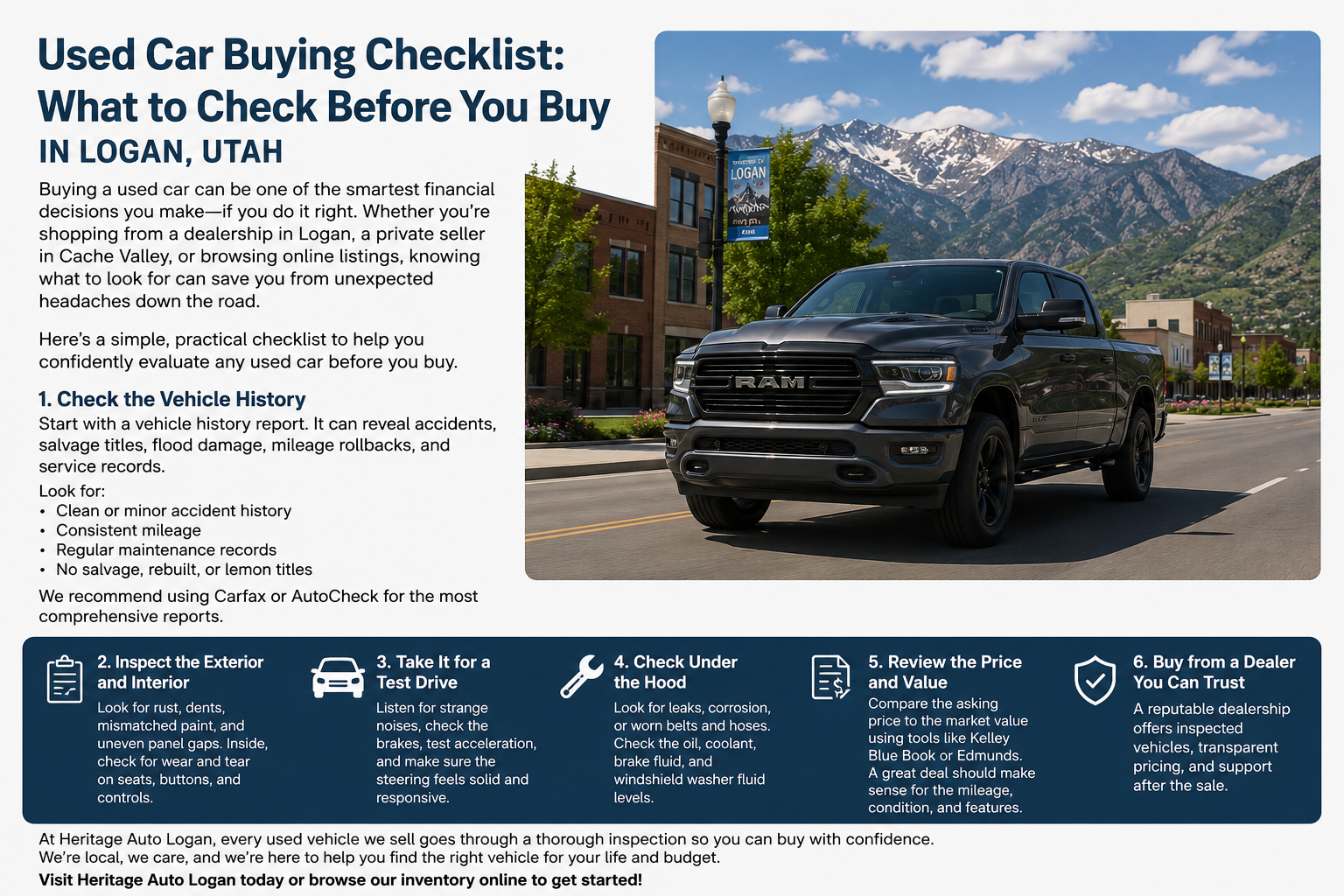
Customer inspecting a used RAM 1500 in Logan, Utah using a used car buying checklist.

Used Car Buying Checklist: What to Check Before You Buy

Buying a used vehicle is one of the smartest ways to save money, but only if you know what to look for before signing the paperwork. Whether you're shopping for your teenager's first car, upgrading your family SUV, or searching for a dependable work truck, taking a few extra minutes to inspect the vehicle can save you thousands of dollars, and a lot of headaches, later. Here's a practical checklist every used car shopper should follow. 1. Review the Vehicle History Report One of the first things you should ask for is a vehicle history report. A report can reveal important details like: Previous accidents Title issues Flood or fire damage Odometer discrepancies Service history Number of previous owners A clean history doesn't guarantee a perfect vehicle, but it provides valuable insight into how it has been treated over the years. 2. Walk Around the Vehicle Before you even start the engine, take a slow walk around the vehicle. Look for: Dents or scratches Rust around wheel wells or doors Mismatched paint Uneven panel gaps Cracked lights or windshield damage Small cosmetic flaws aren't always deal breakers, but inconsistencies may indicate previous repairs. 3. Inspect the Tires The tires tell you a lot about how a vehicle has been maintained. Check for: Even tread wear Adequate tread depth Matching tire brands Cracks or dry rot Uneven wear could point to alignment or suspension issues. 4. Look Under the Hood You don't have to be a mechanic to notice warning signs. Check for: Fluid leaks Corroded battery terminals Damaged belts or hoses Dirty engine oil Low coolant A clean engine bay isn't everything, but obvious neglect should raise questions. 5. Test Every Feature Don't assume everything works. Test the: Air conditioning and heater Power windows Door locks Infotainment system Backup camera Bluetooth Cruise control Headlights and turn signals Replacing electronics can become expensive after purchase. 6. Take a Thorough Test Drive A quick trip around the block isn't enough. Drive on both city streets and the highway. Pay attention to: Steering feel Brake performance Engine acceleration Transmission shifting Unusual noises Vibration Suspension comfort The vehicle should feel predictable and confidence-inspiring. 7. Ask About Maintenance Records Regular maintenance is often a better indicator of future reliability than mileage alone. Ask whether the owner or dealership has records for: Oil changes Brake service Tire rotations Transmission service Major repairs A well-documented maintenance history is always a positive sign. 8. Compare the Price Before buying, compare the asking price with similar vehicles in your area. Consider: Mileage Trim level Options Overall condition Market demand An unusually low price may signal hidden problems, while an overpriced vehicle may not offer good value. Buy From a Dealership You Trust Buying from a reputable dealership often provides additional peace of mind. Many dealerships inspect and recondition their vehicles before offering them for sale, giving buyers more confidence than purchasing from an unknown private seller. Transparency, a thorough inspection process, and knowledgeable staff can make all the difference. The Heritage Way At Heritage Auto Logan, we believe buying a used vehicle should be exciting, not stressful. Every pre-owned vehicle we offer is carefully inspected, and our team is happy to answer your questions, explain a vehicle's history, and help you find the right fit for your lifestyle and budget. We believe informed buyers become happy owners, and that's exactly the experience we strive to provide every day.

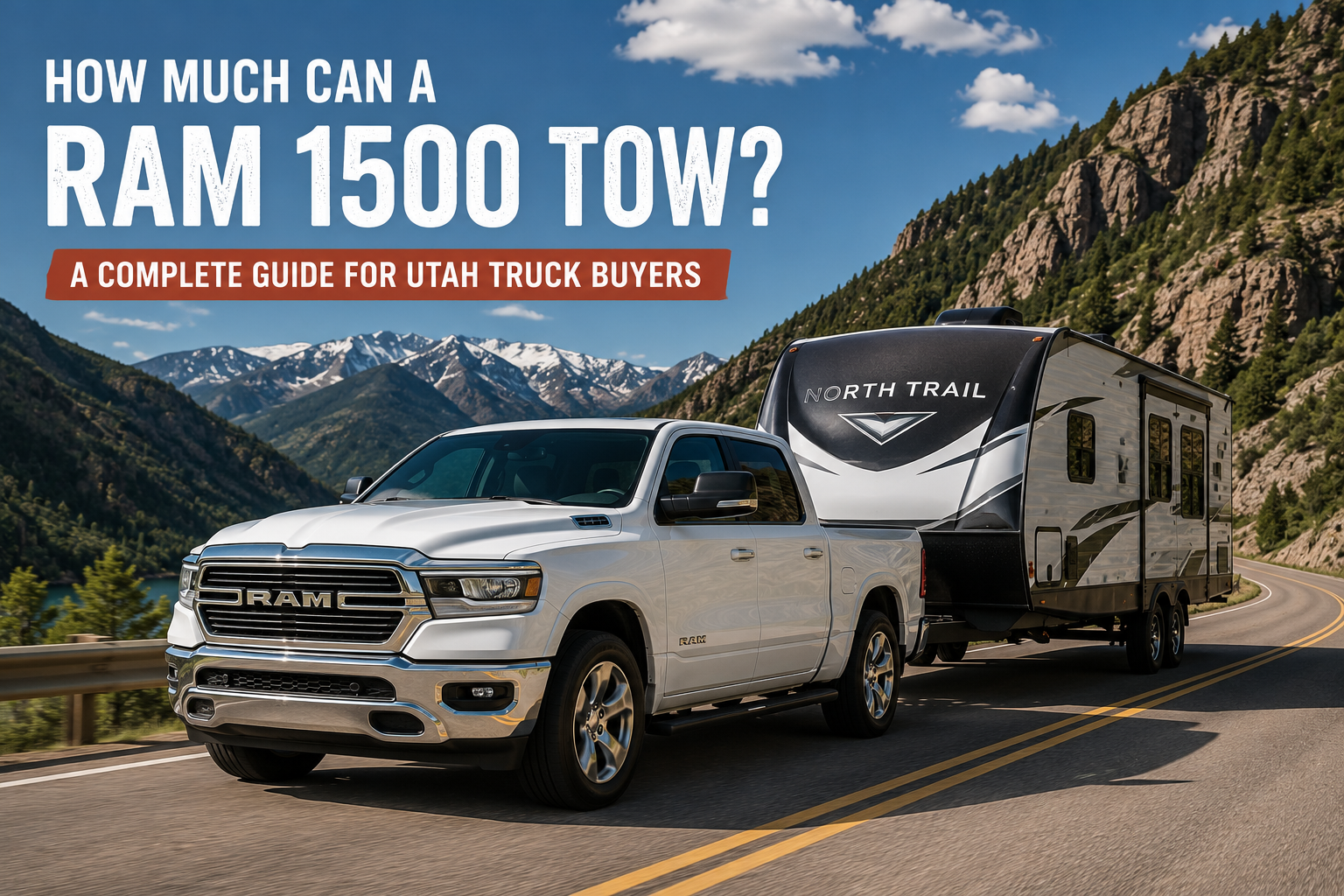
White RAM 1500 towing a travel trailer through Logan Canyon near Cache Valley, Utah.

How Much Can a RAM 1500 Tow? A Complete Guide for Utah Truck Buyers

If you're shopping for a pickup truck, towing capacity is probably high on your list of priorities. Whether you're hauling a camper to Bear Lake, towing a boat for a weekend on the reservoir, or pulling a utility trailer for work, knowing what your truck can safely handle is essential. The RAM 1500 has earned a reputation as one of America's most capable half-ton pickups. It combines impressive towing power with a comfortable ride, advanced technology, and the kind of refinement that makes it just as enjoyable on your daily commute as it is on a weekend adventure. Here's what you should know before choosing your next truck. What Is the Maximum Towing Capacity of a RAM 1500? The answer depends on the engine, drivetrain, cab configuration, axle ratio, and equipment package. When properly equipped, newer RAM 1500 models can tow well over 10,000 pounds, making them an excellent choice for many recreational and work-related towing needs. If you only pull a small utility trailer a few times a year, nearly every RAM 1500 configuration will have more than enough capability. If you're planning to tow a larger travel trailer or heavy equipment regularly, choosing the right engine and towing package becomes much more important. Choosing the Right Engine One of the strengths of the RAM 1500 lineup is that it offers options for different types of drivers. If your truck will spend most of its life commuting around Cache Valley with occasional weekend towing, a standard engine provides an excellent balance of performance and efficiency. Drivers who tow larger campers, enclosed trailers, or work equipment may benefit from one of the more powerful engine options that deliver additional torque and higher towing limits. The key isn't simply choosing the biggest engine. It's choosing the engine that matches how you'll actually use your truck. Towing Is About More Than Horsepower Many shoppers focus on horsepower, but towing performance depends on several factors working together. Payload capacity, axle ratio, suspension, cooling systems, and trailer brake equipment all play an important role. Even something as simple as how you load your trailer can affect stability and safety. That's why it's important to look at your truck's specific towing rating instead of relying on general numbers you find online. Don't Forget Payload Payload and towing capacity often get confused. Towing capacity refers to how much weight your truck can pull behind it. Payload is how much weight your truck can safely carry inside the cab and bed. Passengers, tools, coolers, firewood, luggage, and trailer tongue weight all count toward payload. For many truck owners, payload becomes the limiting factor long before they reach the truck's maximum towing capacity. Understanding both numbers helps ensure you're operating safely. Technology Makes Towing Easier Modern RAM 1500 trucks include features that make towing far less stressful than it used to be. Depending on the model and equipment, available features may include: Trailer Reverse Steering Control Blind Spot Monitoring with trailer coverage Trailer Brake Controller Tow/Haul Mode Surround View Camera Digital rearview mirror Adaptive Cruise Control These technologies help reduce driver fatigue and make long trips more enjoyable. Which RAM 1500 Is Right for You? If you're towing a lightweight fishing boat a few weekends each year, you probably don't need the truck with the highest towing number on the brochure. On the other hand, if you're regularly pulling a large camper into the mountains or hauling equipment for your business, choosing the right configuration from the beginning can save frustration later. A conversation about what you actually tow is usually more valuable than comparing maximum numbers alone. The Heritage Way At Heritage Auto Logan, we know buying a truck isn't about chasing the biggest specification sheet. It's about finding the pickup that fits your lifestyle. We'll take the time to understand how you use your truck, explain the differences between available configurations, and help you choose a RAM 1500 that's capable without paying for features you don't need. Whether you're towing for work, recreation, or a little of both, we're here to help you make a confident decision.

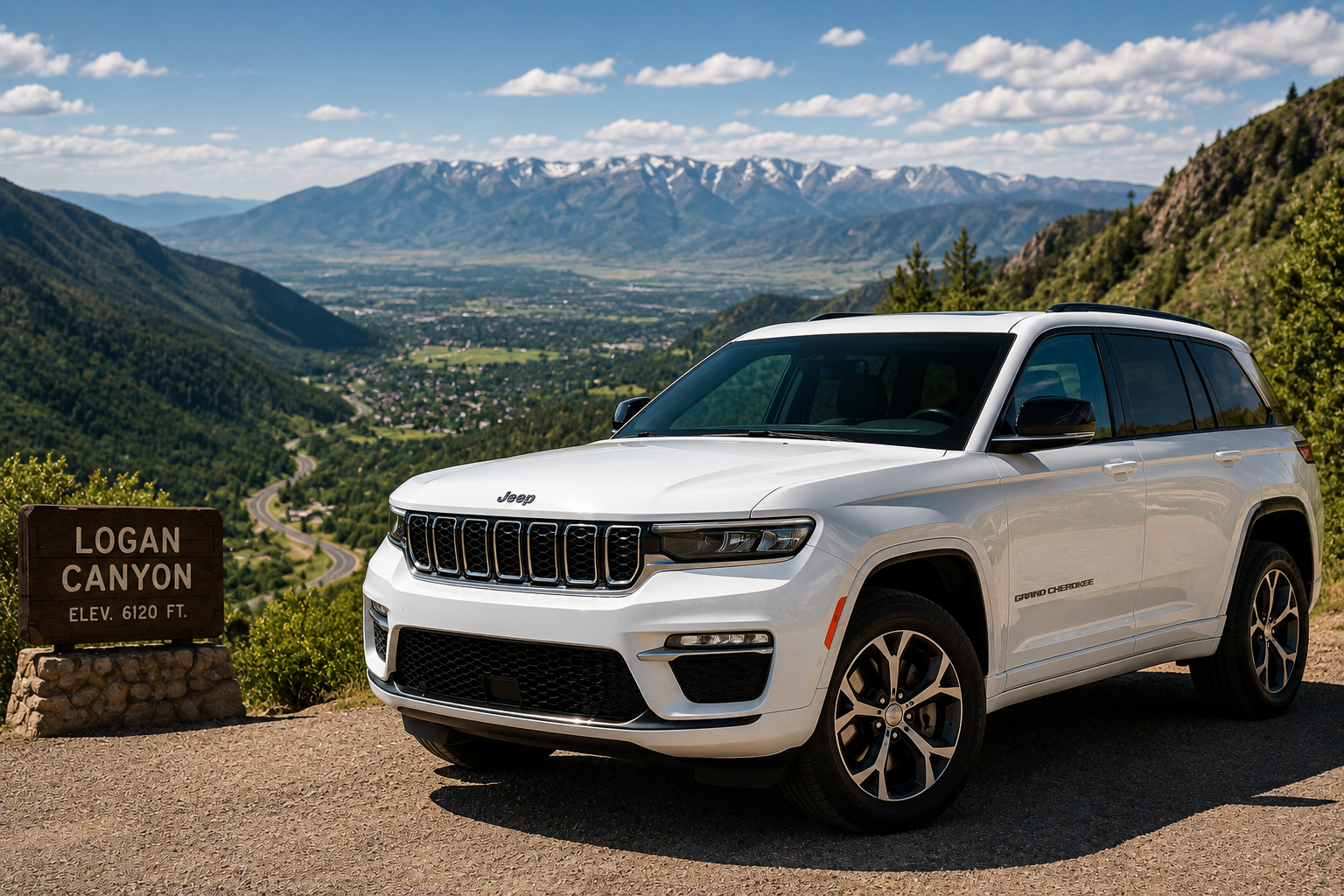
Jeep Grand Cherokee overlooking Logan Canyon near Cache Valley, Utah, highlighting Jeep's legendary four-wheel drive capability.

Which Jeep Grand Cherokee 4x4 System Is Right for You?

If you've started shopping for a Jeep Grand Cherokee, you've probably noticed names like Quadra-Trac I, Quadra-Trac II, and Quadra-Drive II. At first glance, they sound more like software updates than four-wheel drive systems. The truth is, each one was designed for a different kind of driver. Some people simply want extra confidence when the roads get slick in the winter. Others spend their weekends towing a camper to Bear Lake or exploring backroads in the mountains. The good news is there's a Grand Cherokee built for both. Understanding the differences can help you choose the right SUV without paying for capability you may never use. Quadra-Trac I: Simple, Automatic Confidence If you're looking for a Grand Cherokee that can handle Utah's changing seasons without asking you to think about it, Quadra-Trac I is an excellent place to start. This full-time four-wheel drive system automatically transfers power to the wheels with the best traction whenever conditions change. You don't need to push a button or shift into four-wheel drive. It simply works in the background. For most drivers, that's exactly what they want. Whether you're driving through a snowstorm in Cache Valley or hitting a rain-soaked highway on your way to Salt Lake City, Quadra-Trac I is designed to give you added confidence without adding complexity. Best for: Daily drivers, commuters, and families. Quadra-Trac II: Ready for More Adventure If your weekends involve dirt roads, boat ramps, or mountain trails, Quadra-Trac II offers another level of capability. One of its biggest advantages is a two-speed transfer case with a low-range gear. That gives the vehicle more control in steep, slippery, or uneven terrain where extra traction really matters. You may never need it during your daily commute, but if you enjoy camping, fishing, or exploring Utah's backcountry, you'll appreciate having it. Think of Quadra-Trac II as the system that bridges everyday driving and serious outdoor recreation. Best for: Drivers who regularly venture beyond paved roads. Quadra-Drive II: Jeep at Its Best Quadra-Drive II is the most advanced four-wheel drive system available on the Grand Cherokee. In addition to the features found in Quadra-Trac II, it uses an electronic limited-slip rear differential to send power to the wheel with the most traction when conditions become extremely challenging. Picture yourself climbing a snow-covered mountain road or navigating uneven terrain where one wheel loses contact with the ground. Instead of spinning helplessly, the system automatically redirects power where it's needed most. It's one of the reasons the Grand Cherokee continues to earn respect among serious off-road enthusiasts. Best for: Drivers who frequently tackle difficult trails, deep snow, or demanding off-road conditions. What About Selec-Terrain? Many Grand Cherokee models also include Jeep's Selec-Terrain traction management system. With the turn of a dial, you can choose driving modes like Auto, Snow, Sand, Mud, or Rock, depending on the conditions you're facing. The system adjusts throttle response, transmission behavior, and traction control to help your vehicle perform its best. It's another example of how Jeep combines capability with technology to make driving easier. Which One Do Most People Need? This is one of the questions we hear most often. The answer depends on how you actually use your vehicle. If your Grand Cherokee spends most of its time commuting around Logan, running errands, and taking family road trips, Quadra-Trac I will likely do everything you need. If you regularly head into the mountains, tow recreational equipment, or enjoy exploring Utah's scenic backroads, Quadra-Trac II offers extra capability that's well worth considering. And if off-road adventures are part of your lifestyle, Quadra-Drive II is difficult to beat. Don't Buy Capability You'll Never Use It's easy to assume that more features automatically mean a better vehicle. Sometimes that's true. Other times, you're simply paying for equipment you'll rarely use. The goal isn't to buy the most advanced four-wheel drive system. The goal is to buy the one that fits your lifestyle. That's why spending a few minutes talking through how you actually drive is often more valuable than reading a list of specifications. The Heritage Way At Heritage Auto Logan, we know choosing a vehicle isn't just about comparing numbers on a brochure. It's about understanding how those features make a difference in everyday life. Whether you're deciding between trim levels, comparing four-wheel drive systems, or simply wondering which Grand Cherokee best fits your family, we're here to answer your questions without pressure. Our job isn't to sell you the most expensive Jeep on the lot. It's to help you drive home in the one that's right for you.