




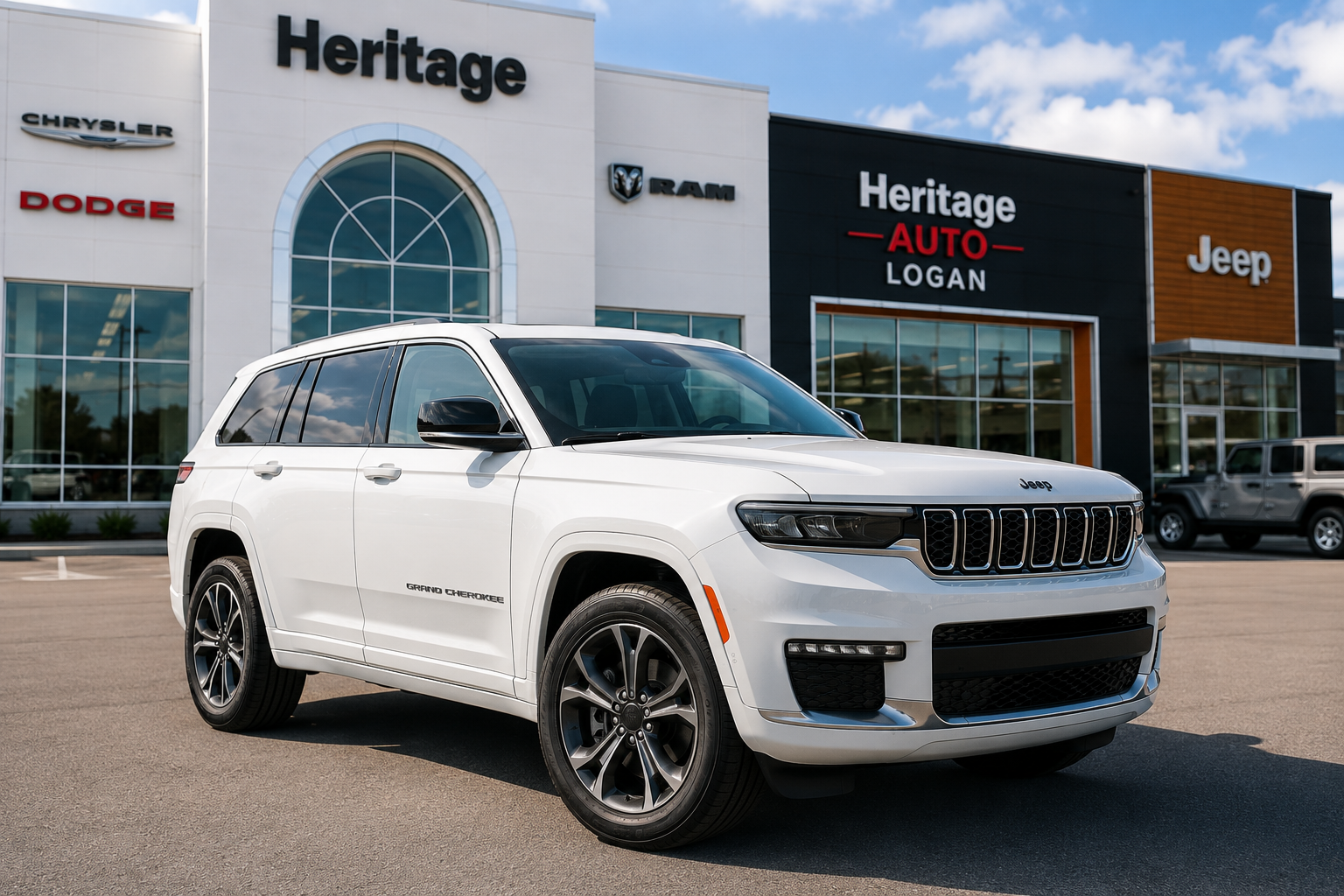
The Jeep Grand Cherokee has earned its reputation as one of America’s most popular SUVs for a reason. It strikes a balance that’s hard to find. It’s comfortable enough for the daily commute, capable enough for weekend adventures, and refined enough to make long road trips enjoyable.
If you’ve started shopping for one, you’ve probably discovered something else.
There are a lot of trim levels.
Laredo. Altitude. Limited. Overland. Summit. Summit Reserve. Trailhawk.
It’s enough to make anyone wonder whether they’re comparing completely different vehicles.
The good news is they’re all Grand Cherokees. They share the same Jeep DNA. The difference is how each one is equipped and who it’s designed for.
Let’s break them down in plain English.
Laredo: Everything You Need, Nothing You Don’t
The Laredo is where the Grand Cherokee lineup begins, but “base model” doesn’t really tell the story.
It still offers impressive safety technology, a comfortable interior, modern infotainment, and the confident ride Grand Cherokee owners expect.
If you’re looking for a dependable SUV for commuting, family trips, and Utah winters without paying for luxury features you may never use, the Laredo deserves a serious look.
Best for: Budget-conscious buyers who want Jeep quality and capability.
Altitude: A Little More Style
The Altitude takes everything people like about the Laredo and gives it a sportier personality.
Black exterior accents, unique wheels, and upgraded interior details give it a more aggressive appearance without changing what makes it such a practical SUV.
It’s one of those trims people often buy because it simply looks great sitting in the driveway.
Best for: Drivers who want extra style without a major jump in price.
Limited: The Sweet Spot
If someone asked me where most buyers end up, I’d probably say the Limited.
It’s the trim that balances value with comfort.
Leather-trimmed seating, additional technology, upgraded driver-assist features, and a more premium interior make it feel noticeably more upscale without moving into luxury SUV pricing.
For many families around Cache Valley, this is the trim that checks all the boxes.
Best for: Families looking for comfort, technology, and everyday practicality.
Trailhawk: Built for Adventure
Not every Grand Cherokee is built exactly the same.
The Trailhawk is designed for drivers who plan to take advantage of Jeep’s legendary off-road capability.
With standard four-wheel drive, increased ground clearance, skid plates, all-terrain tires, and Jeep’s Quadra-Drive II system, it’s ready for dirt roads, mountain trails, and the kind of adventures that make owning a Jeep so much fun.
Even if your weekends usually involve camping near Bear Lake instead of crawling over boulders, the Trailhawk gives you confidence when the pavement ends.
Best for: Outdoor enthusiasts and serious off-road drivers.
Overland: Comfort Meets Capability
The Overland feels like the point where premium comfort and Jeep capability come together.
You’ll find upgraded interior materials, larger displays, ventilated seats, premium audio, and features designed to make long drives much more enjoyable.
It’s the kind of SUV that’s equally comfortable pulling into a downtown restaurant or heading toward Yellowstone for a family vacation.
Best for: Drivers who spend a lot of time on the road and appreciate premium comfort.
Summit and Summit Reserve: Jeep Luxury
If you didn’t know better, you might mistake the Summit for a luxury SUV costing much more.
Premium leather, real wood accents, advanced driver assistance technology, high-end audio systems, massage seating, and exceptional craftsmanship make these trims feel more like something you’d expect from a luxury brand.
The Summit Reserve takes that experience even further with premium Palermo leather and additional upscale finishes throughout the cabin.
Best for: Buyers who want every available comfort and technology feature Jeep offers.
Which Grand Cherokee Is Right for You?
The truth is there isn’t a single “best” trim level.
The best Grand Cherokee is the one that fits your lifestyle.
If your priority is value, the Laredo is an outstanding choice.
If you want sporty styling, look at the Altitude.
If you’re shopping for the best overall balance, it’s hard to argue against the Limited.
If your weekends involve mountain trails and camping trips, the Trailhawk was built with you in mind.
And if you’re looking for luxury without giving up Jeep capability, the Overland, Summit, and Summit Reserve are all worth exploring.
Seeing Them in Person Makes the Difference
Reading about trim levels is helpful.
Driving them is even better.
Features that sound similar on paper often feel very different once you’re behind the wheel. The seating materials, technology, ride quality, and overall experience become much easier to compare when you can see them side by side.
At Heritage Auto Logan, we enjoy helping customers understand those differences without overwhelming them with technical jargon.
Our goal isn’t to steer you toward the most expensive model. It’s to help you find the Grand Cherokee that fits your needs today and for years to come.
After all, the right SUV isn’t necessarily the one with the most features.
It’s the one that feels like it was built for the way you actually live.
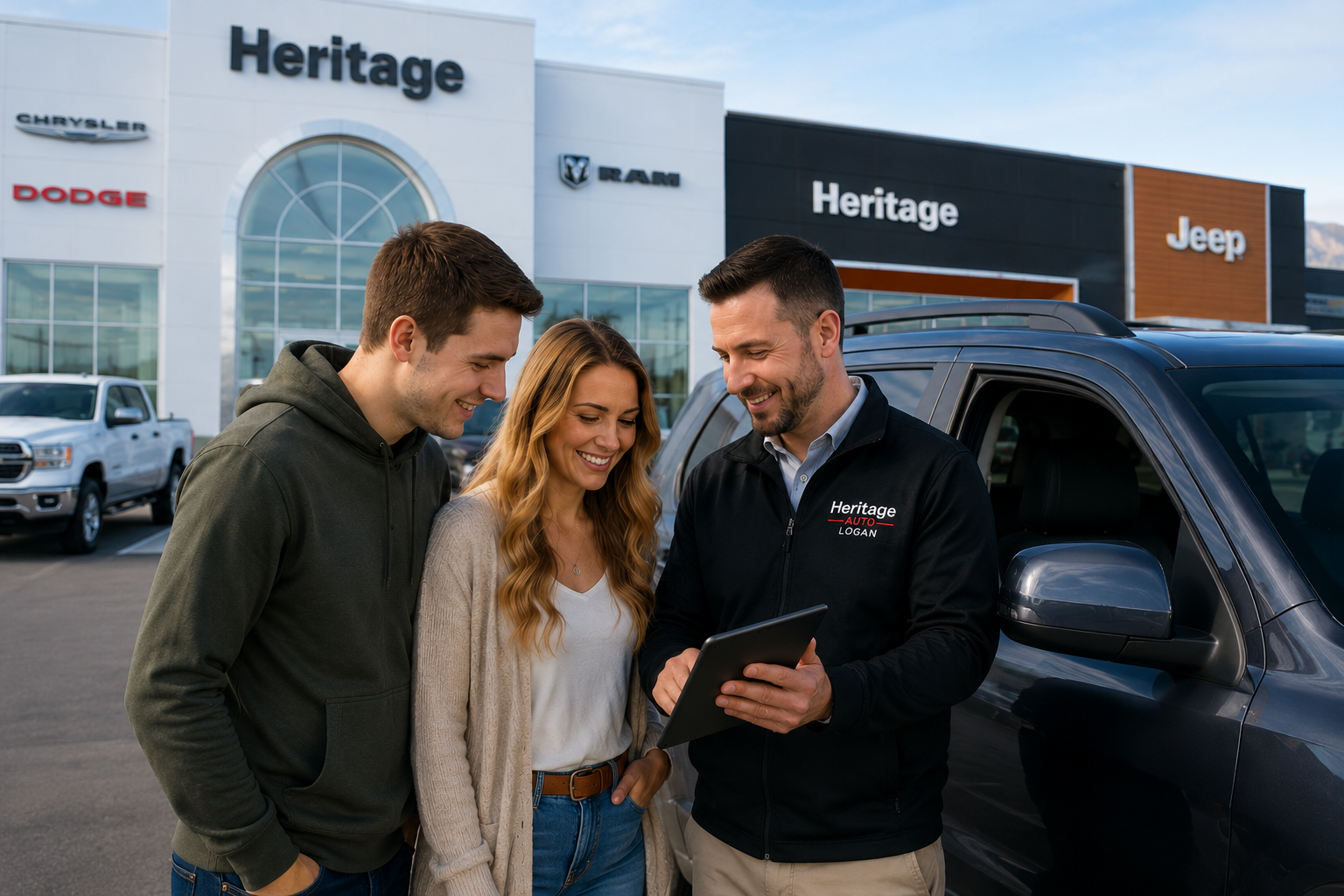
Your brakes are one of those parts of your vehicle that are easy to take for granted until something doesn’t feel right.
Most of us drive the same roads every day. We head to work, take the kids to school, make a quick stop at the grocery store, or drive through Logan Canyon on the weekend. Because braking becomes second nature, it’s easy to overlook the small warning signs that something is changing.
The problem is that brake issues rarely fix themselves. They usually start small and become more expensive, and more dangerous, the longer they’re ignored.
Here are ten signs your brakes may be asking for attention.
1. You Hear Squeaking or Squealing
A high-pitched squeal is one of the most common signs that your brake pads are wearing down.
Many brake pads are designed with a small metal wear indicator that makes noise when it’s time for replacement. Think of it as your vehicle’s way of reminding you before the problem becomes more serious.
2. Grinding Is Never Good
If the squealing turns into a grinding sound, don’t wait.
Grinding often means the brake pad has worn completely through, allowing metal to rub against the brake rotor. What might have been a simple brake pad replacement can quickly turn into replacing rotors as well.
3. Your Vehicle Takes Longer to Stop
Most changes happen gradually, which makes them easy to miss.
If you notice you’re pressing the brake pedal harder than you used to or your vehicle needs more distance to stop, your braking system deserves a closer look.
4. The Brake Pedal Vibrates
Do you feel shaking or pulsing through the brake pedal or steering wheel when slowing down?
Warped brake rotors are a common cause, especially if your brakes have experienced excessive heat. The vibration may seem minor at first, but it usually becomes more noticeable over time.
5. Your Brake Warning Light Comes On
Dashboard warning lights exist for a reason.
If your brake warning light appears, don’t assume it’s a sensor malfunction. It could indicate low brake fluid, worn components, or another issue that should be inspected promptly.
6. The Vehicle Pulls to One Side
If your vehicle drifts left or right while braking, there may be uneven brake wear or a sticking brake caliper.
Besides reducing braking performance, this can also cause uneven tire wear if left uncorrected.
7. The Brake Pedal Feels Soft
Your brake pedal should feel firm and responsive.
If it suddenly feels soft, spongy, or sinks closer to the floor than normal, there could be air in the brake lines or a hydraulic issue that needs immediate attention.
8. You Notice a Burning Smell
After driving through Logan Canyon or coming down from a mountain road, you might occasionally notice a burning odor.
If that smell appears during normal driving or continues after you’ve parked, your brakes could be overheating. That’s something worth having inspected before your next trip.
9. You Can See Visible Wear
You don’t have to be a mechanic to spot obvious brake wear.
Take a quick look through your wheels. If the brake pads appear extremely thin or you notice deep grooves in the brake rotors, it’s time for a professional inspection.
10. It’s Been a While
Sometimes the biggest warning sign isn’t a noise at all.
If you can’t remember the last time your brakes were inspected, it’s probably time.
Regular inspections often catch small issues before they become expensive repairs, giving you peace of mind every time you get behind the wheel.
Don’t Wait Until It Becomes a Bigger Problem
Brake repairs are one of those situations where acting early almost always saves money.
Replacing worn brake pads is far less expensive than replacing damaged rotors, calipers, or other braking components that can be affected when wear is ignored.
More importantly, your brakes are your vehicle’s most important safety system.
When they work properly, you rarely think about them.
When they don’t, nothing else matters.
The Heritage Way
At Heritage Auto Logan, we believe service should be just as transparent as the buying experience.
If you bring your vehicle in because something doesn’t feel right, we’ll inspect your braking system, explain what we find in plain language, and help you understand your options. No pressure, no confusing terminology, and no recommending repairs you don’t need.
Whether you’re commuting across Cache Valley, heading to Bear Lake, or planning your next family road trip, our goal is simple: help you drive with confidence.
Because taking care of your vehicle isn’t just about keeping it on the road.
It’s about helping keep the people inside it safe.
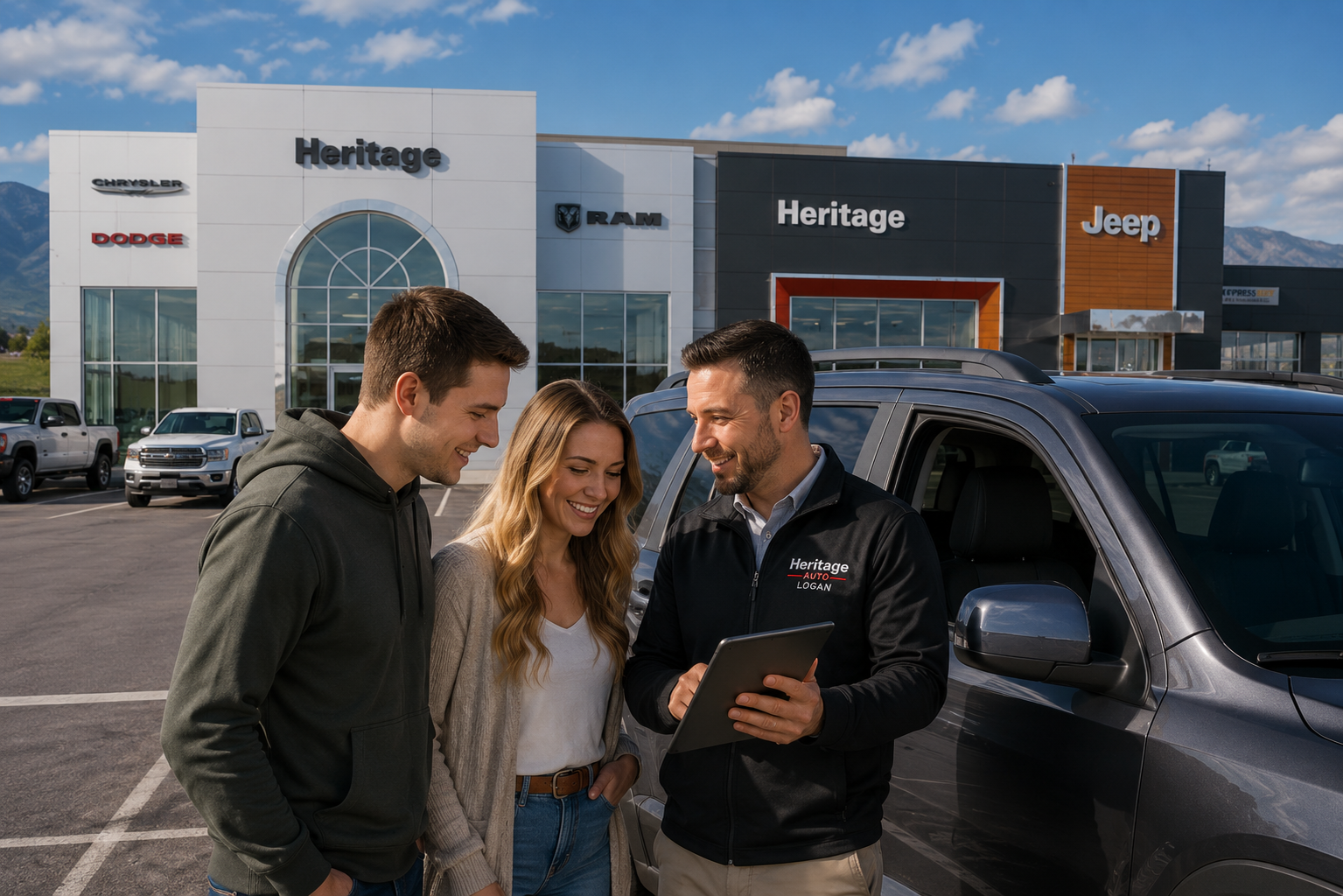
Scroll through Facebook Marketplace or KSL for a few minutes and you’ll find hundreds of used vehicles for sale. Some look like incredible deals. The photos are polished, the descriptions are convincing, and the asking price is often lower than what you’d expect to see at a dealership.
So why do so many people still choose to buy from one?
It comes down to one word: confidence.
Buying a vehicle isn’t like buying a lawn mower or a piece of furniture. It’s something you’ll depend on every day. It needs to get you to work on icy mornings, haul the kids to practice, and make it through road trips without turning into an expensive surprise on the side of the highway.
Price matters, but it’s only part of the equation.
The Best Deals Aren’t Always the Cheapest
Everyone loves saving money. There’s nothing wrong with trying to find the best value.
The problem is that value and price aren’t always the same thing.
Picture this. You find a truck online that’s priced a couple thousand dollars less than similar trucks at local dealerships. It looks clean in the photos, the seller says it’s “always been reliable,” and the test drive goes well. You shake hands, sign the title, and head home feeling like you found a bargain.
Two weeks later, the check engine light comes on.
Now what?
Maybe it’s something minor. Maybe it isn’t. Either way, you’re on your own.
That’s the gamble with private sales. Most people selling a vehicle are honest, but once the keys change hands, the transaction is usually over.
A Dealership Has More to Lose
Think about it from the other side.
A dealership doesn’t just sell one vehicle. It sells hundreds, sometimes thousands, every year.
Its reputation is built one customer at a time.
If people have a bad experience, they tell their friends. They leave reviews. They don’t come back.
That’s why reputable dealerships invest time inspecting vehicles before they ever reach the lot. They want customers to leave satisfied because they know today’s customer might also be tomorrow’s service customer, repeat buyer, or neighbor.
In a community like Cache Valley, reputation travels fast.
Inspections Matter More Than You Think
One of the biggest differences between a dealership and a private seller happens long before you ever see the vehicle.
Most dealerships inspect used vehicles before putting them up for sale. Technicians look for mechanical issues, worn components, and safety concerns that many buyers wouldn’t notice during a fifteen-minute test drive.
Can an inspection guarantee you’ll never have a repair? Of course not.
Vehicles are machines, and every machine eventually needs maintenance.
But knowing trained technicians have already looked it over gives you a level of confidence that’s hard to put a price on.
Buying Local Has Its Advantages
Let’s say you buy a used SUV from someone you’ve never met.
A week later, you have a question about one of the features or notice something that doesn’t seem right.
You send them a message.
Nothing.
You call.
Straight to voicemail.
That happens more often than people think.
When you buy from a local dealership, you know exactly where to go if you need help. Whether it’s a question about your vehicle, scheduling service, or simply learning how a feature works, there’s a team that’s invested in helping you long after the paperwork is signed.
That’s not just customer service. That’s accountability.
Financing Doesn’t Have to Be Complicated
Private sales usually require buyers to arrange financing themselves or pay cash.
For some people, that’s no problem.
For others, it can mean making extra trips to the bank, waiting on paperwork, or trying to coordinate everything with the seller’s schedule.
A dealership can often simplify that process by working with multiple lenders and helping buyers compare financing options in one place.
Less running around means more time enjoying your new vehicle.
Don’t Forget About Your Current Vehicle
Selling your own vehicle sounds easy until you’re the one answering messages at ten o’clock at night.
“Is this still available?”
“What’s your lowest price?”
“Can I come look at it tomorrow?”
Then comes scheduling test drives, negotiating with strangers, and hoping they actually show up.
Trading your vehicle at a dealership eliminates most of that hassle. It may not be the right choice for everyone, but for many people, the convenience alone is worth it.
Trust Is Hard to Measure
You can compare horsepower.
You can compare fuel economy.
You can compare prices.
Trust is different.
It’s built through honest conversations, transparent pricing, and people who are willing to answer your questions instead of avoiding them.
That’s what makes buying from the right dealership different from simply buying from any dealership.
Why It Matters at Heritage Auto Logan
At Heritage Auto Logan, we’ve always believed that selling vehicles is only part of what we do.
Our goal is to create an experience where people feel comfortable asking questions, taking their time, and making a decision that’s right for them.
Some customers buy their first vehicle from us. Others come back years later when it’s time for their next one. Many trust us with routine service long after the sale.
We don’t see those relationships as transactions.
We see them as neighbors choosing to do business with neighbors.
That’s something we’re proud of, and it’s something we work hard to earn every day.
When you’re deciding where to buy your next vehicle, don’t just compare prices.
Compare the experience.
Compare the support you’ll receive after the sale.
Compare the people you’re buying from.
Those are the things you’ll remember long after you’ve forgotten what the window sticker said.
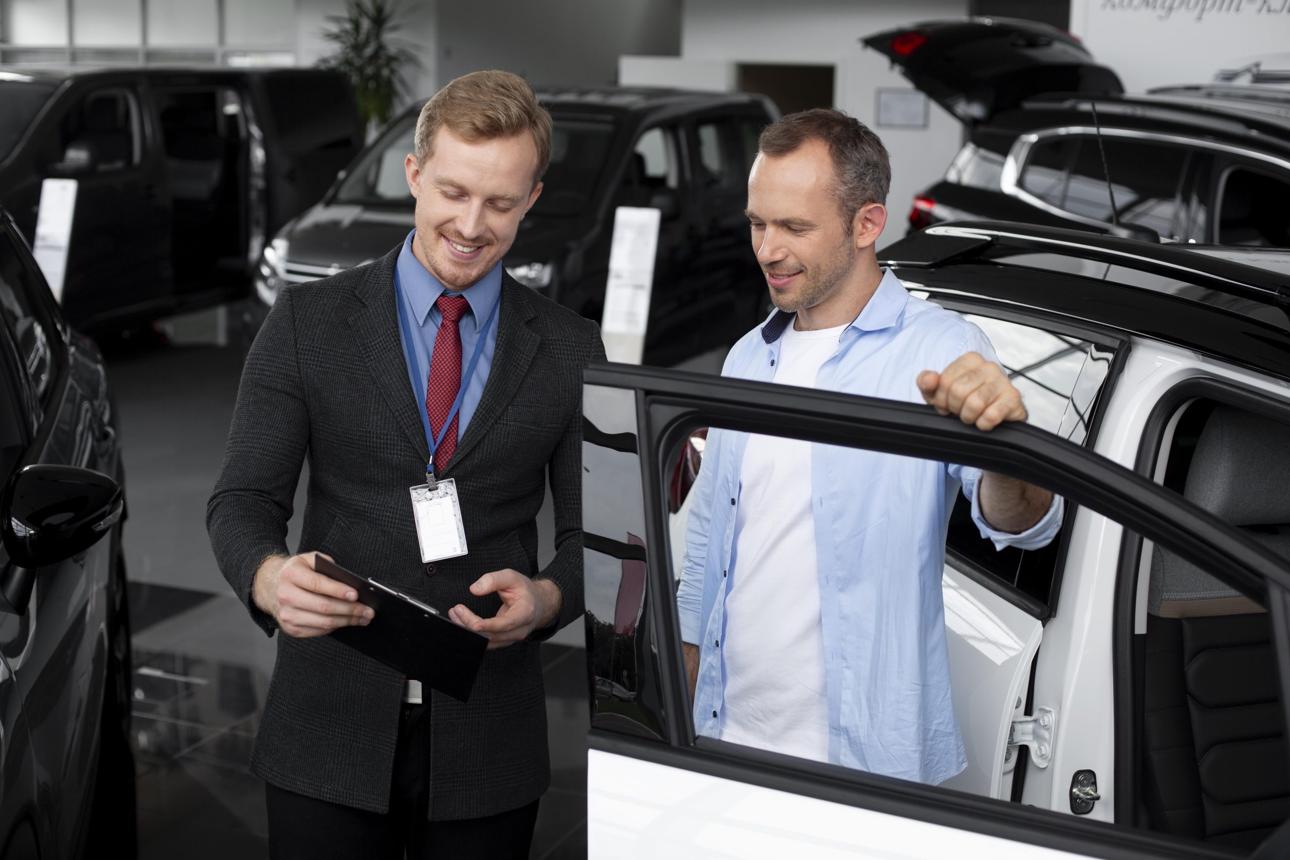
One of the first questions many customers ask when they visit our dealership is, “What’s my trade worth?”
It’s a fair question, but it’s not one with a simple answer.
Many people check an online estimator before they visit, only to find that the number they receive in person is a little different. That can be confusing, especially if you don’t know how trade values are actually determined.
The good news is that appraising a vehicle isn’t guesswork. It’s a process that considers the condition of your vehicle, today’s market, and what buyers are currently looking for.
If you’re thinking about trading in your vehicle, here’s what really affects its value.
1. Mileage Tells Part of the Story
Mileage is often the first thing people mention, and it certainly matters. In general, lower-mileage vehicles command higher values because they’ve experienced less wear over time.
But mileage is only one piece of the puzzle.
Imagine two 2021 Ram 1500 trucks, each with 65,000 miles. One has complete maintenance records, a clean interior, and excellent tires. The other has been neglected, with worn brakes, stained seats, and several cosmetic issues.
Even though the odometer shows the same number, those trucks won’t receive the same appraisal.
The condition behind the miles often matters just as much as the miles themselves.
2. Condition Speaks Volumes
First impressions matter, especially when it comes to vehicles.
Small dents, chipped windshields, worn tires, damaged wheels, or a heavily worn interior can all affect what a vehicle is worth. That’s because the dealership must prepare that vehicle for its next owner.
On the other hand, a clean vehicle that’s been well cared for immediately inspires confidence.
You don’t need to spend thousands of dollars detailing your vehicle before trading it in, but taking care of routine maintenance and keeping it clean can make a noticeable difference.
3. Your Vehicle’s History Matters
Every vehicle has a story.
A vehicle history report helps tell that story by showing previous ownership, title history, reported accidents, and in many cases, documented service records.
A clean history generally increases buyer confidence, while major accidents or title issues may reduce market value.
If you’ve kept maintenance records, bring them with you. They demonstrate that your vehicle has been cared for and can help support its value.
4. The Market Changes Constantly
One of the biggest surprises for many buyers is that vehicle values aren’t fixed.
They’re constantly changing based on supply and demand.
Here in northern Utah, four-wheel-drive trucks and SUVs often become even more desirable as winter approaches. Vehicles that can confidently handle snow-covered roads, trips through Logan Canyon, or weekends at Bear Lake naturally attract more interest.
At other times of the year, fuel-efficient commuters or family SUVs may be in especially high demand.
Market conditions play a much larger role than most people realize.
5. Regular Maintenance Pays Off
Routine maintenance isn’t just good for your vehicle. It’s good for its value.
Oil changes, tire rotations, brake service, and scheduled maintenance show that the vehicle has been cared for consistently.
Think about it from a buyer’s perspective. If you were choosing between two identical SUVs, one with documented service history and one without, which would give you more confidence?
Most people would choose the one with the records.
6. Features Buyers Want
Not all vehicles leave the factory with the same equipment, and those differences can influence value.
Four-wheel drive, leather seating, towing packages, premium audio systems, advanced safety technology, and higher trim levels are often more attractive to buyers.
In Cache Valley, features like heated seats, remote start, and four-wheel drive aren’t just conveniences. They’re features many drivers actively look for during the colder months.
7. Timing Can Make a Difference
Many people wait until their vehicle needs a major repair before considering a trade.
Unfortunately, that’s often when its value has already begun to decline.
Adding another 15,000 miles, replacing expensive components, or waiting another year can all reduce what your vehicle is worth.
That doesn’t mean you should replace your vehicle early, but it does mean it’s smart to understand its current value before you’re forced into making a quick decision.
Having options is always better than having a deadline.
Online Estimates Are a Starting Point
Online valuation tools are helpful, but they don’t tell the whole story.
They can’t see your vehicle’s condition.
They don’t know whether you’ve meticulously maintained it.
They can’t evaluate your tires, interior, paint, or how today’s local market is affecting demand.
That’s why an in-person appraisal almost always provides a more accurate picture.
Thinking About Trading?
Even if you’re not planning to replace your vehicle this month, knowing what it’s worth can help you make smarter decisions.
Trade values change as mileage increases, market demand shifts, and newer model years arrive. Understanding where your vehicle stands today gives you a better idea of what your options may look like tomorrow.
At Heritage Auto Logan, we’re happy to provide a no-pressure appraisal and explain exactly how we arrived at the value. Whether you decide to trade now, keep your vehicle another year, or simply gather information, you’ll leave with a clearer understanding of what your vehicle is worth.
That’s how we believe buying, and trading, should work.
No pressure.
No guessing.
Just honest answers.
What Does “Out-the-Door Price” Really Mean?

If you’ve ever shopped for a vehicle, you’ve probably come across the phrase “out-the-door price.” It’s one of the most common questions buyers ask, and for good reason.
The advertised price on a vehicle isn’t always the final amount you’ll pay. Taxes, registration fees, title fees, and other costs all play a role in the total purchase price. Understanding what makes up the out-the-door price helps you compare vehicles more accurately and eliminates surprises when it’s time to complete the paperwork.
Simply put, the out-the-door price is the total amount it takes to drive your new vehicle home.
What Is Included in an Out-the-Door Price?
Think of the advertised price as the starting point. The out-the-door price includes everything required to complete the purchase.
Depending on your situation, that total may include:
- Vehicle selling price
- Sales tax
- Title fees
- Registration fees
- Documentation fee
- Any optional products or protection plans you choose to purchase
Some of these costs are required by the state, while others depend on the choices you make during the buying process. The important thing is knowing exactly what is included before you sign anything.
Why the Advertised Price Doesn’t Tell the Whole Story
Imagine finding two nearly identical SUVs online.
One is advertised for $32,500, while the other is listed at $33,000. At first glance, the lower-priced vehicle looks like the obvious choice.
But after requesting the out-the-door price from both dealerships, you discover the first vehicle includes additional fees that weren’t immediately obvious, while the second dealership provided a straightforward breakdown from the beginning.
Suddenly, the comparison looks very different.
That’s why experienced shoppers don’t compare advertised prices. They compare total purchase prices.
Why You Should Always Ask for the Out-the-Door Price
One simple question can save you time, frustration, and confusion:
“Can you provide me with the out-the-door price?”
A transparent dealership should have no problem explaining exactly how that number is calculated.
Requesting the complete purchase price allows you to:
- Compare dealerships fairly
- Build an accurate budget
- Understand taxes and government fees
- Avoid unexpected costs
- Make a confident buying decision
When everyone is working from the same numbers, the buying process becomes much simpler.
Transparency Builds Trust
Buying a vehicle is a significant financial decision. You shouldn’t have to guess what you’re paying or wonder whether additional charges will appear later.
That’s why transparency matters.
A dealership that clearly explains pricing demonstrates respect for your time, your budget, and your ability to make informed decisions. Instead of spending your energy trying to figure out the numbers, you can focus on what really matters, choosing the vehicle that’s right for you and your family.
Questions Every Buyer Should Ask
Asking questions isn’t just acceptable, it’s smart.
Here are a few worth asking before moving forward:
- Is this the complete out-the-door price?
- What taxes and government fees are included?
- Which fees are required by the state?
- Are any optional products included in this quote?
- Can you explain each line item on the purchase worksheet?
A trustworthy dealership will gladly walk you through every number. The goal should be clarity, not confusion.
Price Is Important, But Value Matters More
Everyone wants a great deal, but the lowest advertised price doesn’t always represent the best value.
Consider what you’re receiving in return.
Has the vehicle been professionally inspected?
Is the dealership known for treating customers fairly?
Will they be there after the sale if you have questions or need service?
Those factors often matter just as much as the final dollar amount.
A dealership built on honesty and long-term relationships understands that earning your trust is more important than winning a negotiation.
The Heritage Difference
At Heritage Auto Logan, we believe the buying process should be straightforward from beginning to end.
Our goal is to provide clear information, answer every question honestly, and make sure you understand exactly what you’re paying for before making a decision.
That approach reflects who we are as a dealership.
Our mission is built around creating an atmosphere where every guest feels at home. Honesty, integrity, and trust aren’t just words we talk about. They’re principles that guide every conversation we have with our customers.
When you understand the complete out-the-door price, you can shop with confidence, compare vehicles fairly, and enjoy the buying experience instead of worrying about hidden surprises.
Because purchasing your next vehicle should feel exciting, and it should begin with complete transparency.
How Often Should You Change Your Oil?
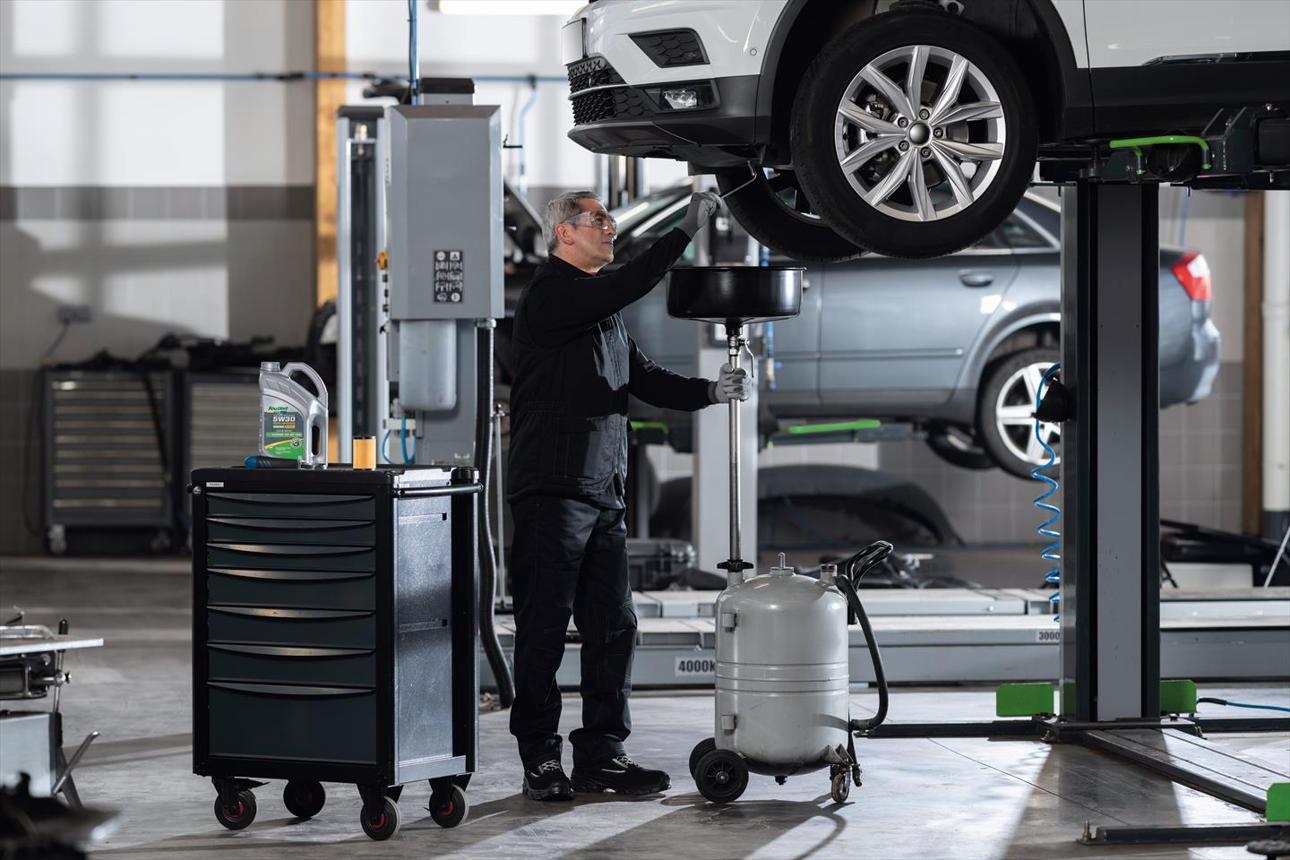
If you’ve owned a vehicle for a while, you’ve probably heard a variety of answers to this question.
Some people swear by changing their oil every 3,000 miles. Others say you can safely drive 7,500 or even 10,000 miles between oil changes.
So who’s right?
The truth is, it depends on your vehicle, your driving habits, and the type of oil your engine uses. Understanding those factors can help you protect your engine, improve performance, and avoid expensive repairs down the road.
Why Oil Changes Matter
Your engine contains hundreds of moving parts working together at high speeds and temperatures.
Motor oil has several important jobs:
- Lubricates engine components to reduce wear
- Helps cool critical engine parts
- Removes dirt and contaminants
- Prevents corrosion
- Improves engine efficiency
Over time, even the highest-quality oil begins to break down. As it ages, it becomes less effective at protecting your engine, making routine oil changes one of the simplest and most important maintenance tasks you can perform.
The Old 3,000-Mile Rule Isn’t Always Necessary
Years ago, changing your oil every 3,000 miles was good advice.
Today’s vehicles and synthetic oils have changed that.
Many modern vehicles—including current Chrysler, Dodge, Jeep, and Ram models—can often go 5,000 to 10,000 miles between oil changes when using the manufacturer-recommended oil.
The best source of information is always your owner’s manual or your vehicle’s Oil Life Monitoring System.
What Affects How Often You Should Change Your Oil?
Several factors determine the ideal oil change interval.
Your Driving Habits
Frequent short trips, stop-and-go traffic, towing, off-road driving, or driving in extreme temperatures can all cause your engine oil to wear out more quickly.
If you regularly drive in these conditions, you may need oil changes more often than someone who primarily drives on the highway.
Conventional vs. Synthetic Oil
Synthetic oil generally lasts longer and provides better protection than conventional oil.
Many newer vehicles are designed specifically for synthetic oil, which is one reason recommended service intervals have increased in recent years.
Using the correct oil recommended by your manufacturer is essential for optimal engine performance.
Your Vehicle’s Age
Older vehicles with higher mileage may benefit from more frequent oil changes, especially if they consume oil or have accumulated years of wear.
Regular maintenance can help extend the life of these engines and improve reliability.
Don’t Ignore Your Oil Change Reminder
Modern vehicles use sophisticated systems that monitor engine operating conditions and calculate when it’s time for service.
If your oil change reminder appears, don’t wait weeks—or months—to schedule maintenance.
Ignoring the warning can lead to:
- Increased engine wear
- Reduced fuel efficiency
- Poor engine performance
- Sludge buildup
- Potentially costly repairs
A timely oil change is far less expensive than replacing major engine components.
Signs Your Vehicle May Need an Oil Change
Even if the reminder light hasn’t appeared, watch for these common signs:
- Engine oil appears dark or dirty
- Unusual engine noise
- Oil warning light
- Burning oil smell
- Reduced fuel economy
- Excessive engine vibration
If you notice any of these symptoms, it’s a good idea to have your vehicle inspected.
Oil Changes Are More Than Just Fresh Oil
During an oil change, trained technicians often perform a basic inspection that can help identify small problems before they become expensive ones.
This may include checking:
- Tire condition and pressure
- Fluid levels
- Battery condition
- Belts and hoses
- Brakes
- Air filters
- Exterior lights
Routine maintenance visits provide an opportunity to catch issues early, saving time and money in the long run.
Protect Your Investment
Your vehicle is one of the largest investments you’ll make.
Routine maintenance—including regular oil changes—is one of the easiest ways to protect that investment and keep your vehicle running reliably for years to come.
Whether you drive a brand-new Jeep Wrangler, a hardworking Ram truck, or a dependable family SUV, staying on top of your oil changes helps maximize performance, fuel efficiency, and engine life.
Let Heritage Auto Logan Help Keep You on the Road
At Heritage Auto Logan, we know routine maintenance plays a major role in keeping your vehicle dependable.
Our factory-trained technicians use manufacturer-recommended parts and fluids, perform thorough inspections, and treat every vehicle with the same care we’d give our own.
If you’re unsure whether it’s time for your next oil change, our team is happy to help.
Because taking care of your vehicle today helps ensure it’s ready for every adventure tomorrow.
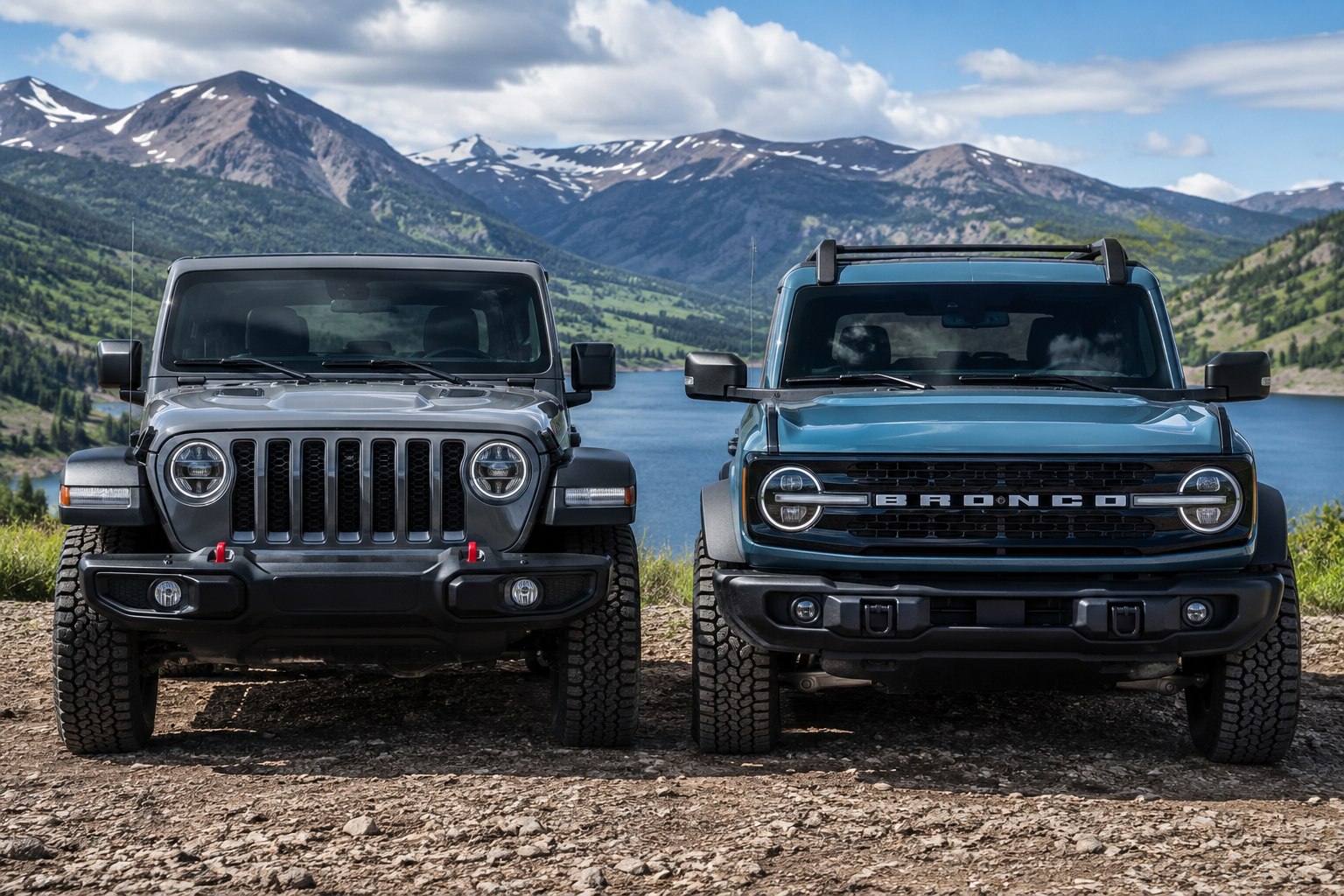
If you’re shopping for an adventure-ready SUV, two names probably top your list: the Jeep Wrangler and the Ford Bronco.
Both are built for exploring beyond the pavement. Both offer removable tops, four-wheel-drive capability, and unmistakable styling. And both have earned loyal followings.
So which one is the better choice for life in northern Utah?
The answer depends on how, and where you plan to use it. Let’s compare the two.
Off-Road Capability
Both the Wrangler and Bronco are incredibly capable off-road vehicles, but Jeep has one important advantage:
Experience.
The Wrangler’s legendary 4×4 heritage has been refined over decades. From Moab’s slickrock trails to the mountain roads around Cache Valley, Jeep has built a reputation for conquering challenging terrain with confidence.
Available features include:
- Rock-Trac® and Selec-Trac® 4×4 systems
- Electronic locking differentials
- Disconnecting front sway bar (Rubicon models)
- Impressive approach and departure angles
- Excellent ground clearance
The Bronco is highly capable as well, particularly in its off-road trims, but the Wrangler continues to be the benchmark many enthusiasts compare everything else against.
Winner: Jeep Wrangler
Everyday Driving
Not every mile is spent on a trail.
For commuting, errands, and highway driving, both vehicles offer modern interiors and comfortable seating.
The Bronco provides a slightly more refined on-road ride in some configurations, while the Wrangler delivers a more traditional Jeep driving experience that many owners genuinely enjoy.
If your driving consists primarily of city streets and highways with only occasional off-road adventures, the Bronco may have a slight edge in ride comfort.
If you enjoy the unmistakable Jeep experience every time you drive, the Wrangler remains hard to beat.
Winner: Slight edge to Ford Bronco
Open-Air Freedom
One of the biggest reasons people buy a Wrangler is the ability to remove the roof and doors.
Few vehicles deliver the same sense of freedom.
While the Bronco also offers removable doors and roof panels, Jeep’s system has been perfected over generations and remains one of its defining features.
There’s simply nothing quite like driving through Logan Canyon on a summer evening with the top down and the mountains all around you.
Winner: Jeep Wrangler
Customization
No vehicle has more aftermarket support than the Jeep Wrangler.
Whether you’re looking for:
- Lift kits
- Larger tires
- Roof racks
- Camping accessories
- Winches
- Lighting upgrades
- Bumpers
- Storage solutions
You’ll find thousands of options designed specifically for the Wrangler.
The Bronco aftermarket continues to grow, but Jeep still offers unmatched variety.
Winner: Jeep Wrangler
Community
Owning a Jeep is about more than driving.
It’s about joining a community.
Jeep owners share traditions that have become legendary:
- The Jeep Wave
- Jeep Ducking
- Trail rides
- Jeep clubs
- Community events
- Charity rides
There’s a unique camaraderie among Jeep owners that extends well beyond the vehicle itself.
Bronco owners are building a passionate community of their own, but Jeep’s decades-long culture remains one of the strongest in the automotive world.
Winner: Jeep Wrangler
Winter Driving in Utah
Cache Valley winters demand confidence behind the wheel.
Both vehicles offer excellent four-wheel-drive capability and are well suited for snow-covered roads, mountain passes, and changing weather conditions.
For many Utah drivers, either SUV will provide the traction needed to confidently handle winter conditions when equipped with appropriate tires.
This category comes down more to driver preference than capability.
Winner: Tie
Technology and Interior Comfort
Both SUVs offer impressive technology, including:
- Large touchscreens
- Wireless smartphone integration
- Advanced driver-assistance features
- Premium audio options
- Digital driver displays
Recent Wranglers have significantly improved interior refinement while maintaining their rugged character.
The Bronco leans slightly more toward a modern SUV feel, while the Wrangler proudly embraces its adventurous personality.
Winner: Tie
Which One Fits Your Lifestyle?
Choose the Ford Bronco if you:
- Spend most of your time on paved roads
- Prefer a slightly more SUV-like driving feel
- Want a modern interpretation of an off-road vehicle
Choose the Jeep Wrangler if you:
- Love outdoor adventures
- Want legendary off-road capability
- Appreciate open-air driving
- Enjoy customizing your vehicle
- Want to join one of the most passionate automotive communities in the world
Why So Many Utah Drivers Choose Jeep
Utah is Jeep country.
From the mountain roads of Logan Canyon to the trails of Moab and countless backroads in between, few vehicles feel more at home here than the Jeep Wrangler.
Its combination of capability, versatility, and unmistakable character makes it a natural fit for drivers who see every weekend as an opportunity to explore.
Whether you’re heading to Bear Lake, camping in the Bear River Mountains, or simply taking the scenic route home, the Wrangler turns every drive into part of the adventure.
Experience the Difference at Heritage Auto Logan
Reading comparisons is a great place to start—but the best way to decide is from behind the wheel.
At Heritage Auto Logan, we’re here to help you compare vehicles, answer your questions, and find the SUV that best fits your lifestyle. Whether you’re considering a Jeep Wrangler, another Jeep model, or simply exploring your options, our team is committed to helping you make an informed decision without pressure.
Because the best adventures begin with the right vehicle—and the right dealership.
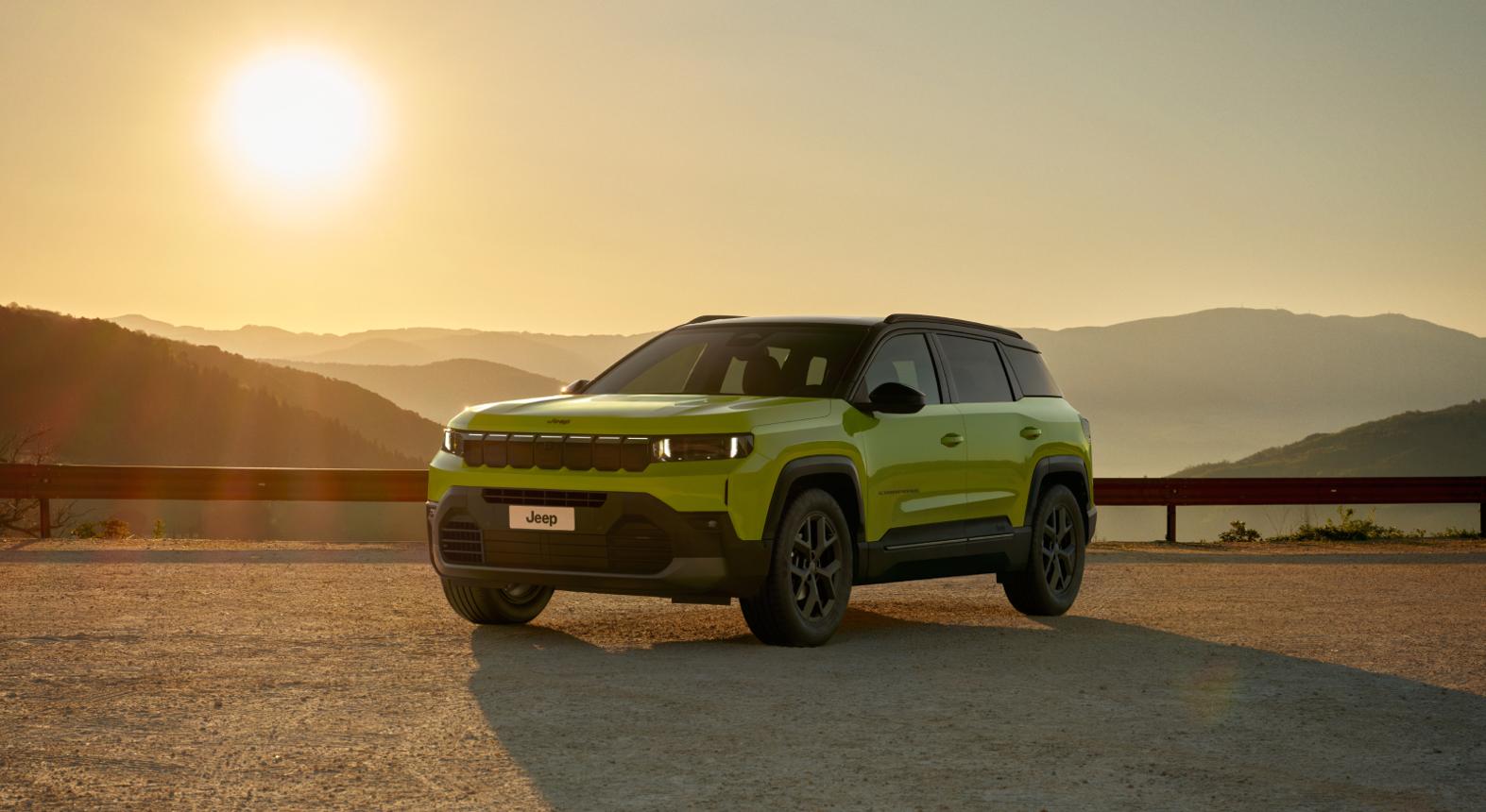
When you hear the name “Jeep,” it’s natural to picture rugged trails, mountain adventures, and off-road capability.
The 2026 Jeep Compass delivers all of that Jeep DNA, but packages it into a compact SUV that’s just as comfortable navigating city streets as it is exploring Utah’s scenic backroads.
For drivers who want versatility, confidence, and modern technology without stepping into a larger SUV, the Compass strikes an impressive balance.
Built for Everyday Life and Weekend Adventures
Life doesn’t always happen on the highway.
One day you’re commuting to work. The next you’re loading up for a camping trip, heading to Bear Lake, or taking the family through Logan Canyon for a weekend drive.
The 2026 Jeep Compass is designed for both.
Its compact size makes parking and maneuvering easy, while its available four-wheel-drive capability gives drivers the confidence to tackle changing road conditions, gravel roads, and Utah’s unpredictable winters.
It’s equally at home downtown or deep in the mountains.
Confidence in Every Season
Living in northern Utah means experiencing all four seasons.
Sunny summer road trips can quickly give way to snowy mountain passes in the winter. That’s why many drivers appreciate having a vehicle that’s prepared for changing conditions.
The Jeep Compass offers available Jeep Active Drive® 4×4 systems designed to improve traction when roads become slippery, muddy, or snow-covered.
Whether you’re commuting across Cache Valley or heading into the mountains for a weekend getaway, you’ll appreciate the added confidence behind the wheel.
Modern Technology That Keeps You Connected
The 2026 Compass combines Jeep capability with the technology today’s drivers expect.
Depending on the trim level, available features include:
- Large touchscreen infotainment system
- Wireless Apple CarPlay® and Android Auto™
- Digital driver information display
- Available premium audio system
- Multiple USB charging ports
- Remote vehicle access features
Whether you’re navigating unfamiliar roads or streaming your favorite playlist, the Compass keeps you connected every mile of the journey.
Designed With Safety in Mind
One of the Compass’s greatest strengths is its commitment to driver and passenger safety.
Available driver-assistance technologies can include:
- Adaptive Cruise Control
- Blind-Spot Monitoring
- LaneSense® Lane Departure Warning
- Forward Collision Warning with Active Braking
- Rear Cross-Path Detection
- ParkSense® Parking Assist
These features work together to provide greater awareness and confidence during everyday driving.
Comfortable for the Whole Family
Despite its compact footprint, the Jeep Compass offers a surprisingly spacious interior.
Comfortable seating, flexible cargo space, and thoughtful storage solutions make it an excellent choice for:
- Young professionals
- Small families
- College students
- Outdoor enthusiasts
- Empty nesters
Whether you’re loading groceries, sports equipment, camping gear, or luggage for a weekend trip, the Compass is ready for whatever the day brings.
Why the Compass Is Perfect for Utah
Few vehicles fit the northern Utah lifestyle as naturally as the Jeep Compass.
It has the versatility to handle:
- Winter commutes through snow and ice
- Scenic drives through Logan Canyon
- Weekend adventures to Bear Lake
- Camping trips in the Bear River Mountains
- Daily errands around Cache Valley
It’s large enough to handle life’s adventures while remaining compact enough for everyday convenience.
That’s a combination many Utah drivers appreciate.
More Jeep Than You Might Expect
Some people think of the Compass as simply a small SUV.
But once you experience its capability, comfort, and versatility, it’s clear that it carries the same adventurous spirit that has defined Jeep for generations.
It encourages spontaneous road trips.
Weekend escapes.
Exploring roads you’ve never traveled before.
Because every Jeep is built with one purpose in mind:
Helping you discover what’s around the next bend.
Your Next Adventure Starts Here
Whether you’re searching for your first SUV, upgrading your daily driver, or looking for a vehicle that’s equally comfortable on city streets and mountain roads, the 2026 Jeep Compass deserves a closer look.
At Heritage Auto Logan, we’re proud to help drivers throughout Cache Valley find vehicles that fit their lifestyle—not just their budget.
If you’re ready for an SUV that blends Jeep capability with everyday practicality, stop by Heritage Auto Logan and experience the 2026 Jeep Compass for yourself.
Adventure doesn’t always require a destination.
Sometimes, it simply starts with the right vehicle.
Every dealership has vehicles.
Many have competitive pricing.
Most offer financing options.
So what truly makes one dealership different from another?
The answer isn’t found on the lot.
It’s found in the people.
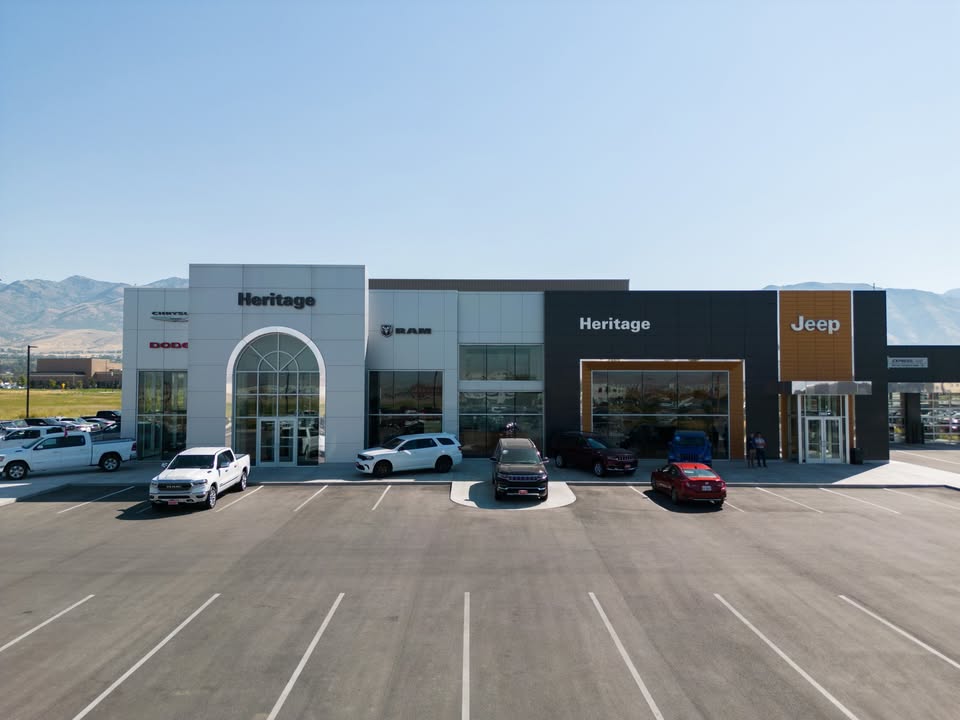
At Heritage Auto Logan, we believe that exceptional customer experiences begin with exceptional employees. That’s why one of the most important parts of The Heritage Way isn’t about the vehicles we sell, it’s about the people who serve our customers every day.
Great Service Starts Behind the Scenes
When customers visit a dealership, they usually interact with a salesperson, finance manager, or service advisor.
But every positive experience is supported by an entire team working behind the scenes.
Service technicians carefully inspect and maintain vehicles.
Detail professionals prepare every vehicle with pride.
Parts specialists ensure repairs are completed correctly.
Office staff keep everything running smoothly.
Managers support employees so they can focus on customers.
Each person plays an important role in creating an experience built on quality and trust.
When every team member is committed to excellence, customers notice the difference.
Happy Employees Help Create Happy Customers
Think about the best customer service you’ve ever received.
Chances are it came from someone who genuinely enjoyed helping people.
Employees who feel respected, supported, and appreciated naturally bring more enthusiasm to their work. They’re more willing to answer questions, solve problems, and go the extra mile because they know they’re part of something meaningful.
At Heritage Auto Logan, we believe that taking care of our team is one of the best ways to take care of our customers.
A positive workplace creates positive experiences.
Trust Is Built One Conversation at a Time
Buying a vehicle is a significant decision.
Customers deserve to work with people who listen carefully, answer questions honestly, and help them make informed choices without unnecessary pressure.
That kind of trust can’t be created through advertisements or promotions.
It’s earned through everyday conversations.
Whether someone is shopping for a brand-new Jeep, comparing used SUVs, or visiting our service department, we want every interaction to reflect the values that define The Heritage Way:
- Honesty
- Integrity
- Respect
- Professionalism
- Genuine care for every guest
These values guide every conversation because they guide every employee.
Teamwork Benefits Everyone
The strongest teams don’t compete against one another.
They support one another.
At Heritage Auto Logan, we believe collaboration creates better results for customers.
When departments communicate well, customers receive faster service.
When employees share knowledge, buyers receive better information.
When everyone works toward the same goal, the entire experience becomes smoother and more enjoyable.
Great customer service isn’t the result of one outstanding employee.
It’s the result of an outstanding team.
Creating an Atmosphere That Feels Like Home
Our mission begins with a simple idea:
“Everything we do centers on building an atmosphere at Heritage Auto where our guests feel at home.”
Feeling at home means being greeted with a smile.
It means being treated with respect.
It means never feeling rushed or pressured.
It means knowing your questions are welcome and your concerns are heard.
Creating that atmosphere isn’t something that happens by accident.
It happens because every employee shares a commitment to treating people the way they would want their own family to be treated.
More Than Selling Vehicles
Our employees understand that every customer has a story.
Some are purchasing their very first vehicle.
Some are celebrating a growing family.
Some are replacing a vehicle after an accident.
Others simply need dependable transportation they can count on.
Behind every purchase is a person, and behind every person is a unique set of needs.
Listening to those needs is just as important as finding the right vehicle.
Building Relationships That Last
Our goal has never been simply to sell someone a vehicle.
Our goal is to earn the opportunity to serve them for years to come.
That’s why so many of our customers return when it’s time for another vehicle, recommend us to friends and family, and trust us with their service needs long after the sale.
Those relationships don’t happen because of one transaction.
They happen because of consistent experiences with employees who genuinely care.
The Heritage Way
At Heritage Auto Logan, we know that vehicles may bring customers through our doors, but people are what make them want to come back.
Our employees are the heart of our dealership.
Their dedication, professionalism, and commitment to honesty, integrity, and trust are what transform an ordinary dealership visit into an exceptional customer experience.
That’s The Heritage Way.
And it’s the standard we’ll continue striving for every single day.
Sincerely,
Ron H,
General Manager
If you’ve ever driven a Jeep Wrangler, chances are you’ve experienced “The Wave.”
Maybe another Jeep owner lifted a hand as you passed on a mountain road. Perhaps someone parked next to you at the grocery store simply because you were both driving Jeeps.
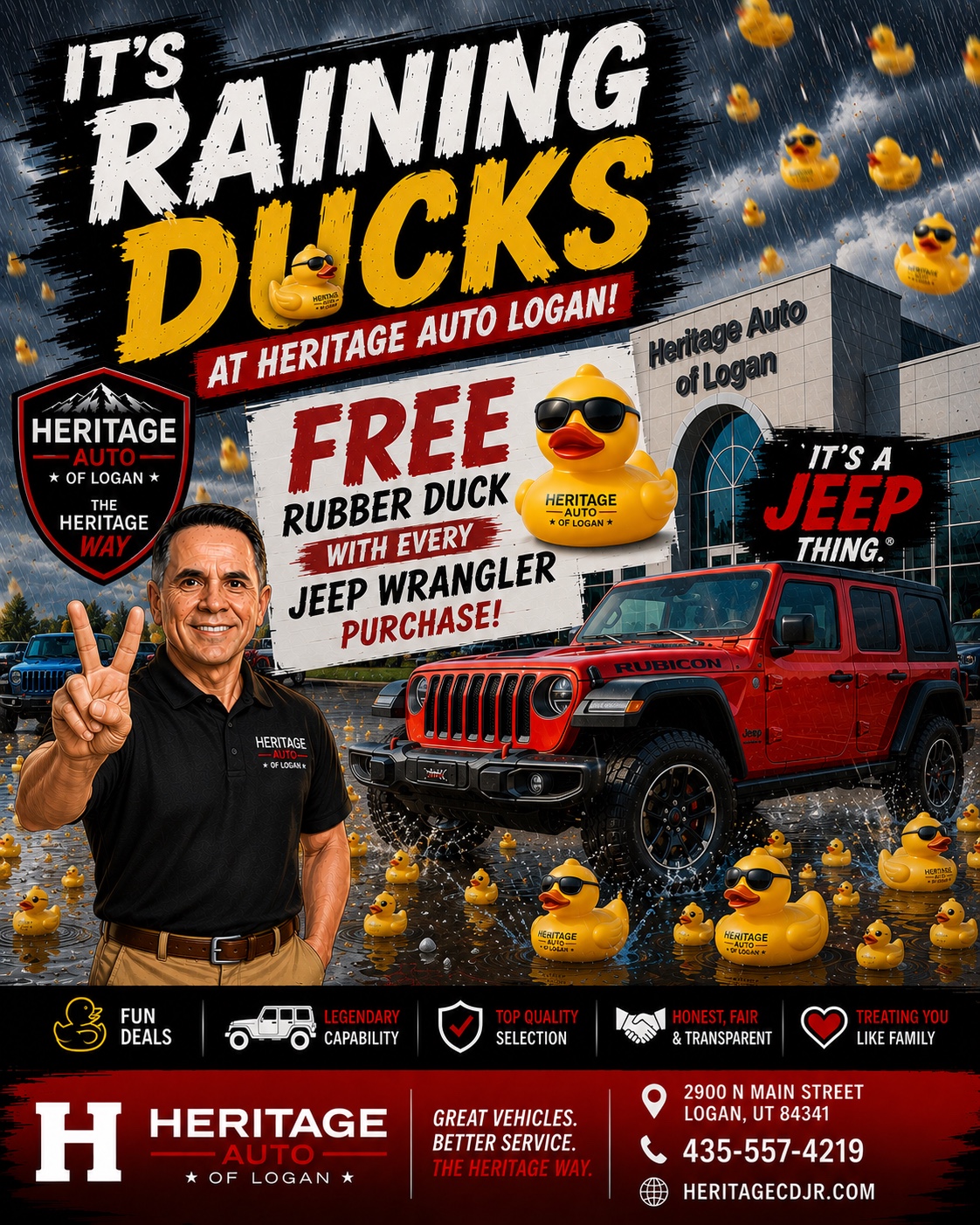
Or maybe you walked back to your Wrangler and found a small rubber duck sitting on the door handle with a handwritten note that simply said, “Nice Jeep.”
Welcome to one of the most unique automotive communities in the world.
Jeep Ownership Is Different
There are plenty of great vehicles on the road, but very few create the sense of connection that comes with owning a Jeep.
Jeep owners aren’t just drivers, they’re adventurers, explorers, campers, hikers, off-road enthusiasts, and families who appreciate making memories together.
Whether you’re driving through Logan Canyon, exploring forest service roads in Franklin Basin, or heading to Bear Lake for the weekend, there’s an unspoken understanding among Jeep owners:
Adventure is better when it’s shared.
The Story Behind the Rubber Duck
One of the newest Jeep traditions has become one of its most beloved.
Known as “Jeep Ducking,” the tradition is simple.
If you see a Jeep you admire, leave a rubber duck with a friendly note. It’s a small gesture that often turns an ordinary day into something memorable.
No prizes.
No competition.
Just one Jeep owner making another Jeep owner’s day a little brighter.
It’s a reminder that kindness doesn’t have to be complicated.
Sometimes it’s as simple as a rubber duck.
Why Jeep Owners Love the Tradition
The duck itself isn’t really the point.
The point is connection.
It sparks conversations between strangers. It creates smiles in parking lots. It reminds people that they’re part of something bigger than themselves.
In a world where many interactions happen through screens, the Jeep community continues to build real relationships one wave, one trail ride, and one rubber duck at a time.
Adventure Lives Here in Northern Utah
Few places are better suited for Jeep ownership than Cache Valley.
Within minutes of Logan, you can experience winding canyon roads, alpine lakes, mountain overlooks, scenic byways, and countless outdoor adventures.
From Logan Canyon and Tony Grove to Monte Cristo and Bear Lake, there are endless opportunities to take the scenic route.
Owning a Jeep isn’t just about having four-wheel drive.
It’s about having the freedom to say “yes” when adventure calls.
More Than a Vehicle
Ask Jeep owners why they love their Wrangler, Gladiator, Grand Cherokee, or Wagoneer, and you’ll hear stories instead of specifications.
Stories about camping trips.
Family vacations.
Weekend adventures.
Mountain trails.
New friendships.
Unexpected memories.
That’s because Jeep ownership is about experiences, not just transportation.
Why Community Matters
At Heritage Auto Logan, we believe buying a vehicle should feel like joining a family.
That belief fits naturally with the Jeep community.
The same values that make Jeep ownership special, friendliness, adventure, respect, and helping one another—are the same values we strive to live every day.
Whether you’re buying your very first Jeep or your fifth, our goal is to make you feel at home from the moment you walk through our doors.
Because the best dealerships don’t simply sell vehicles.
They build relationships.
Ready to Join the Jeep Family?
If you’ve never experienced Jeep ownership, you might think it’s all about capability.
And while Jeeps are certainly built for adventure, that’s only part of the story.
The real magic happens after you drive off the lot.
It’s waving to another Jeep on a mountain road.
It’s discovering a hidden trail with your family.
It’s finding a rubber duck on your door handle after dinner in downtown Logan.
It’s realizing you’ve become part of a community that values adventure, kindness, and making memories.
At Heritage Auto Logan, we’re proud to celebrate everything that makes Jeep ownership unique. From scenic drives through northern Utah to the simple joy of sharing a rubber duck, we love being part of a community that believes the journey is just as important as the destination.
Because around here, it’s more than a Jeep.
It’s a lifestyle.

