




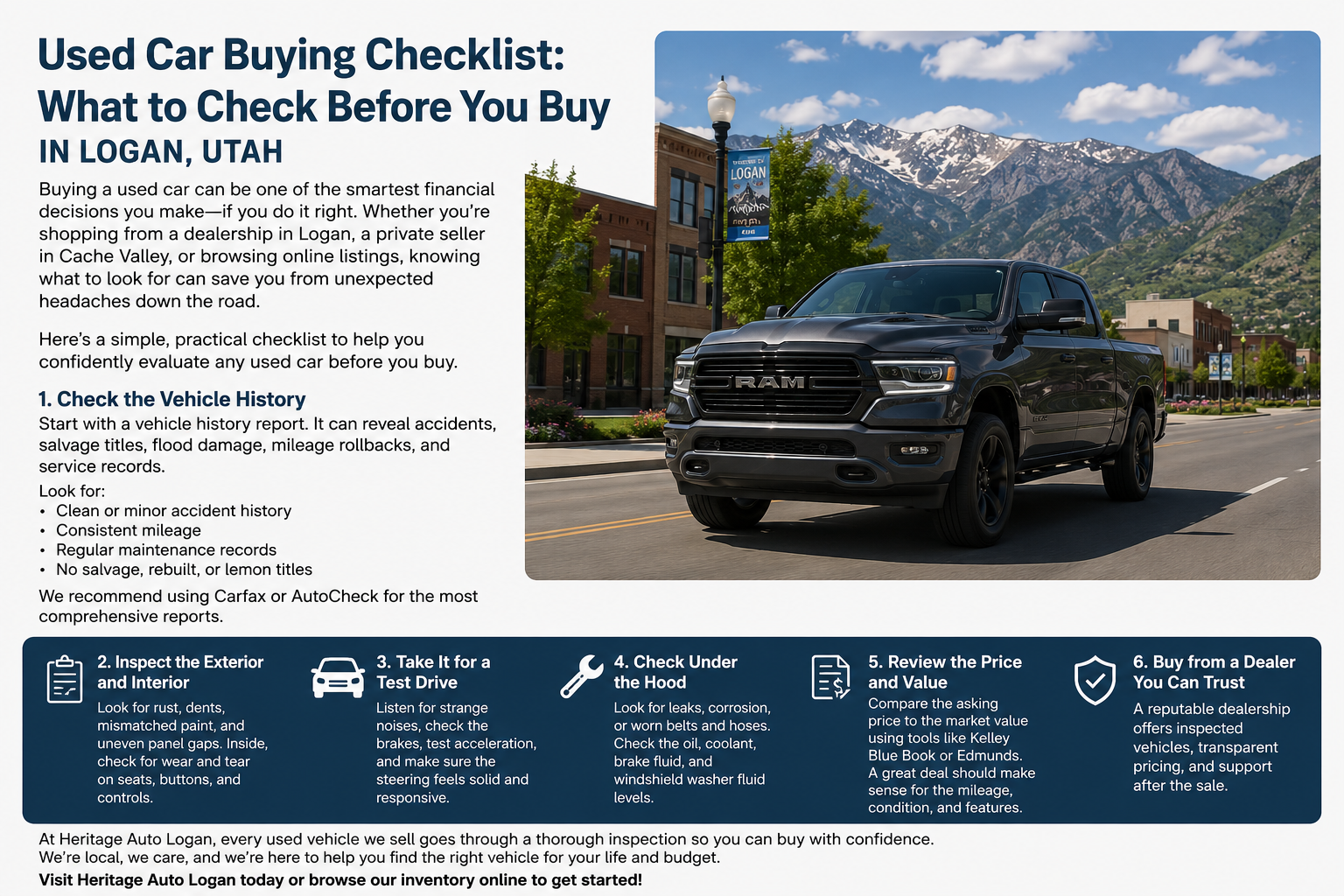
Buying a used vehicle is one of the smartest ways to save money, but only if you know what to look for before signing the paperwork.
Whether you’re shopping for your teenager’s first car, upgrading your family SUV, or searching for a dependable work truck, taking a few extra minutes to inspect the vehicle can save you thousands of dollars, and a lot of headaches, later.
Here’s a practical checklist every used car shopper should follow.
1. Review the Vehicle History Report
One of the first things you should ask for is a vehicle history report.
A report can reveal important details like:
- Previous accidents
- Title issues
- Flood or fire damage
- Odometer discrepancies
- Service history
- Number of previous owners
A clean history doesn’t guarantee a perfect vehicle, but it provides valuable insight into how it has been treated over the years.
2. Walk Around the Vehicle
Before you even start the engine, take a slow walk around the vehicle.
Look for:
- Dents or scratches
- Rust around wheel wells or doors
- Mismatched paint
- Uneven panel gaps
- Cracked lights or windshield damage
Small cosmetic flaws aren’t always deal breakers, but inconsistencies may indicate previous repairs.
3. Inspect the Tires
The tires tell you a lot about how a vehicle has been maintained.
Check for:
- Even tread wear
- Adequate tread depth
- Matching tire brands
- Cracks or dry rot
Uneven wear could point to alignment or suspension issues.
4. Look Under the Hood
You don’t have to be a mechanic to notice warning signs.
Check for:
- Fluid leaks
- Corroded battery terminals
- Damaged belts or hoses
- Dirty engine oil
- Low coolant
A clean engine bay isn’t everything, but obvious neglect should raise questions.
5. Test Every Feature
Don’t assume everything works.
Test the:
- Air conditioning and heater
- Power windows
- Door locks
- Infotainment system
- Backup camera
- Bluetooth
- Cruise control
- Headlights and turn signals
Replacing electronics can become expensive after purchase.
6. Take a Thorough Test Drive
A quick trip around the block isn’t enough.
Drive on both city streets and the highway.
Pay attention to:
- Steering feel
- Brake performance
- Engine acceleration
- Transmission shifting
- Unusual noises
- Vibration
- Suspension comfort
The vehicle should feel predictable and confidence-inspiring.
7. Ask About Maintenance Records
Regular maintenance is often a better indicator of future reliability than mileage alone.
Ask whether the owner or dealership has records for:
- Oil changes
- Brake service
- Tire rotations
- Transmission service
- Major repairs
A well-documented maintenance history is always a positive sign.
8. Compare the Price
Before buying, compare the asking price with similar vehicles in your area.
Consider:
- Mileage
- Trim level
- Options
- Overall condition
- Market demand
An unusually low price may signal hidden problems, while an overpriced vehicle may not offer good value.
Buy From a Dealership You Trust
Buying from a reputable dealership often provides additional peace of mind.
Many dealerships inspect and recondition their vehicles before offering them for sale, giving buyers more confidence than purchasing from an unknown private seller.
Transparency, a thorough inspection process, and knowledgeable staff can make all the difference.
The Heritage Way
At Heritage Auto Logan, we believe buying a used vehicle should be exciting, not stressful.
Every pre-owned vehicle we offer is carefully inspected, and our team is happy to answer your questions, explain a vehicle’s history, and help you find the right fit for your lifestyle and budget.
We believe informed buyers become happy owners, and that’s exactly the experience we strive to provide every day.
Connect with us

